Riders who’ve done a Vietnam cycling tour will mention Hai Van Pass, the climbs, the heat. But what tends to stick longest is usually something else entirely — a homestay dinner, a moment at a market, a conversation that happened despite a real language gap. The cycling is the vehicle; for a lot of riders, the cultural experiences end up being the actual destination.
Here are some of the experiences that tend to leave the deepest impression.
Dawn at the Floating Markets
A 4:30am alarm after days of cycling feels like a lot to ask, but the Mekong Delta’s floating markets — Cai Rang, Phong Dien, Cai Be — operate in the hours around dawn and wind down by mid-morning, so meeting them means meeting their schedule.
What’s there: hundreds of boats loaded with produce, watermelons stacked high, pineapples in pyramids, commerce happening boat-to-boat in a system that’s fed southern Vietnam for generations rather than something staged for visitors. Breakfast, often pho or iced coffee passed boat-to-boat, happens on the water in the early gold light.
A Night in a Homestay
The difference between a hotel and a homestay is the difference between comfortable and genuinely memorable. A homestay means sleeping in a family’s actual home, eating with them, and being treated, for one night, something close to family. In Mai Chau, this might mean a traditional White Thai stilt house with mattresses on the floor under mosquito nets; in the Mekong Delta, a family compound by the river with a long dinner table and far more dishes than anyone should reasonably cook for guests.
What happens after dinner — a guitar coming out, a card game that doesn’t quite make sense but generates real laughter anyway, a grandfather sharing a story through a translator — tends not to happen in a hotel, and it’s a large part of why homestays show up so often in people’s strongest memories of the trip.
Learning to Cook
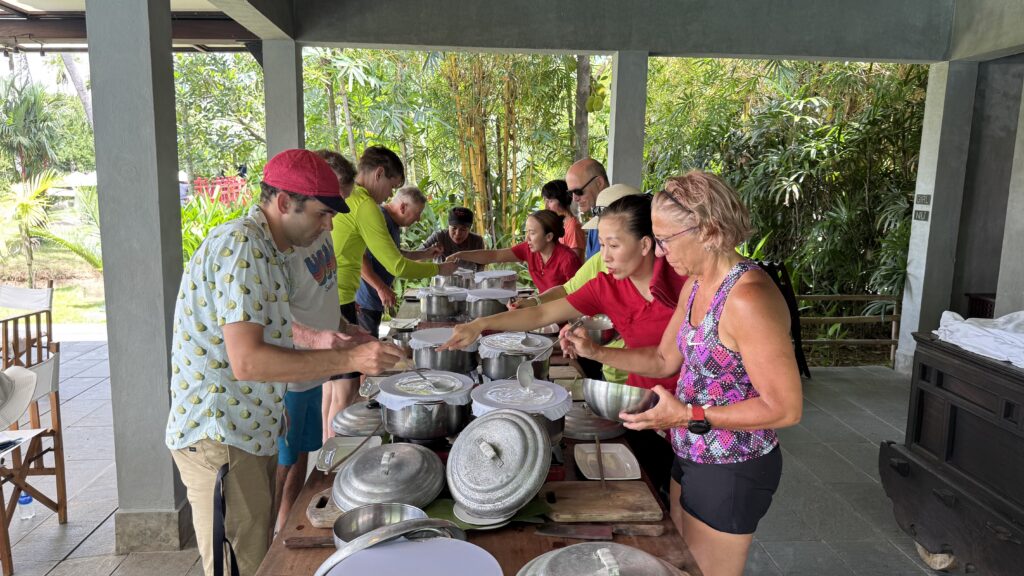
A cooking class taught by a grandmother in her own kitchen, on a table that’s seen decades of use, tends to land differently than one in a purpose-built tourist kitchen. Language often isn’t necessary, since cooking communicates fine on its own — she demonstrates, you fail at rolling rice paper a few times, she laughs and demonstrates again, and eventually something acceptable emerges. Eating what you made together afterward, with her approval, carries weight that a printed recipe card doesn’t.
Local Markets
A local market — not a tourist one, but a market where Vietnamese people actually shop — is a genuine sensory overload: fish in shallow tubs, unfamiliar vegetables next to familiar ones, fruit in colors that don’t show up at home. A good guide turns this into something more than spectacle by explaining what’s there, letting you taste a few things, and helping you understand that the food you’ll eat that day came directly from fields you’ve been riding past, sold by people you can actually talk to.
Temple Visits
Vietnam’s temples and pagodas along cycling routes are usually not the famous ones from guidebooks, but neighborhood temples where local people actually worship. Visiting early, when incense smoke moves through morning light and elderly worshippers make quiet offerings, and simply observing without performing for it, tends to be more meaningful than a hurried daytime visit. Vietnamese Buddhism blends with Confucian ancestor worship and Taoist tradition into something distinctly local, and a guide who can explain the altars, the offerings, and the specific rituals adds real depth to what would otherwise just look unfamiliar.
Rice Field Work
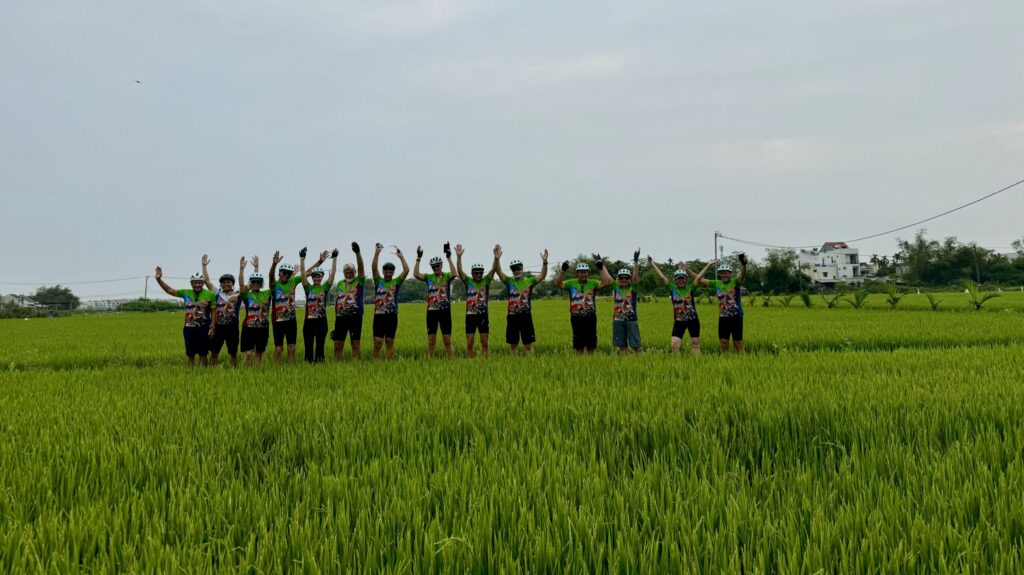
Stopping to actually plant rice alongside a farmer — stepping into the mud, bending at the waist, pushing seedlings in, moving backward so as not to step on what you just planted — tends to change how people think about the rice paddies they’ve been photographing for days. A few minutes of it is enough to feel real fatigue in your back; the farmer does this for eight hours a day during planting season. It’s a small, direct way to understand the labor behind something otherwise abstract.
War History, With Context
Vietnam’s war history is unavoidable on many routes — the DMZ, the Cu Chi Tunnels, remnants of the Ho Chi Minh Trail. What turns these from museum-style stops into something more is a guide who can connect the history to specific, human terms rather than dates and casualty counts. What tends to strike visitors most is the general absence of bitterness in how it’s discussed — described as history rather than grievance, in a country that’s visibly moved forward despite what happened.
Craft Villages
Vietnam has hundreds of villages that have specialized in a single craft — pottery, silk, lacquerware — for generations, and cycling routes often pass directly through them. Watching someone shape clay or spin silk thread with decades of practiced skill, and then trying it yourself with predictably clumsy results, tends to make any souvenir purchased afterward mean more, since you watched it being made and met the hands that made it.
Unplanned Roadside Encounters
Some of the best moments on a cycling tour can’t be planned for. Stopping for water in a village with no tourist infrastructure, getting waved over by a group of locals playing cards, and ending up in a half-translated conversation about families and home — these happen because cyclists move at a pace that makes them approachable in a way cars and buses don’t. Nothing dramatic happens in these moments, and that’s often exactly the point.
The Closing Dinner
Every tour ends somewhere, and the final dinner tends to carry real weight after days or weeks spent together. Toasts, exchanged contact information, and the particular kind of grief that comes from a temporary group ending are common, less because the trip is sad to end than because something genuine was built in a short time.
Wrapping Up
You can cycle plenty of beautiful places. What sets a Vietnam cycling tour apart for a lot of riders isn’t just the physical riding, but how directly the route runs through cultural experience rather than around it — markets, homestays, craft villages, and roadside encounters that the bike itself makes possible. That’s frequently what people end up describing as the actual trip, with the climbing as the means of getting there.
