
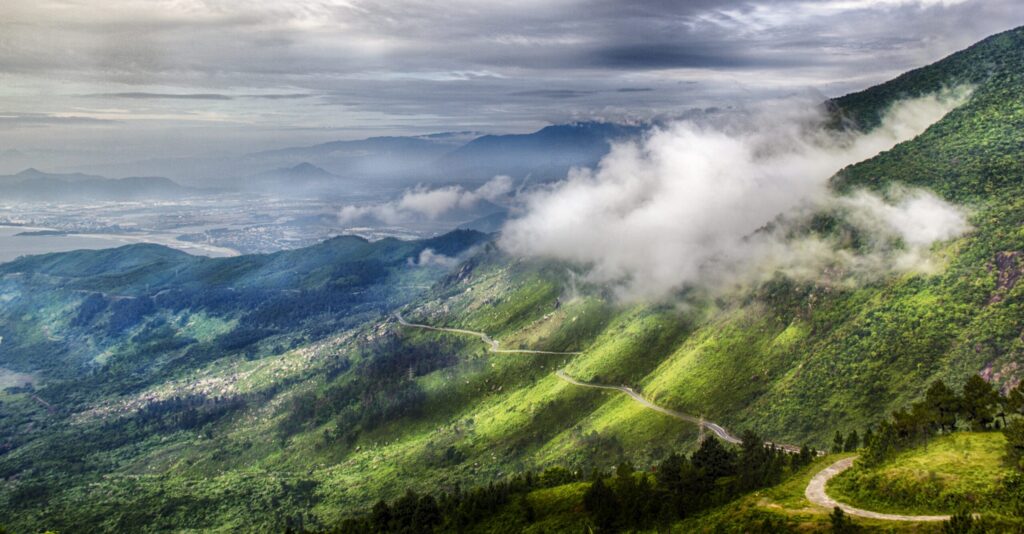
Vietnam Cycling Routes: Complete Comparison Guide
Six routes, one country. Here’s how to tell which one fits your trip.
Quick Comparison Chart
Route | Duration | Distance | Difficulty | Best For | Price | Best Season |
Hanoi → HCMC | 14-21 days | 1,700km | Moderate-Hard | Complete experience, fit cyclists | $$$$ | Nov-Mar |
Hue → Hoi An | 3-7 days | 142-350km | Moderate | First-timers, Hai Van Pass, short trips | $$ | Feb-May |
Ha Giang Loop | 3-5 days | 350-450km | Very Hard | Experienced cyclists, dramatic mountains | $$ | Sep-Nov, Mar-May |
Mekong Delta | 3-5 days | 200-300km | Easy | Culture seekers, flat riding, families | $$ | Nov-Apr |
Northern Mini-Loop | 3-5 days | 200-300km | Easy-Moderate | Beginners, circular route, introduction | $$ | Oct-Apr |
Cross-Border | 7-14 days | 600-1,200km | Moderate-Hard | Multi-country, experienced travelers | $$$ | Nov-Mar |
Difficulty scale: – Easy: mostly flat, 40-60km/day, under 400m elevation/day – Moderate: rolling hills, 60-90km/day, 500-800m elevation/day – Hard: mountains, 80-100km/day, 800-1,200m elevation/day – Very Hard: serious mountains, 80-120km/day, 1,000-2,000m elevation/day
Price scale (per day): $ = $40-80, $$ = $80-150, $$$ = $150-250, $$$$ = $250+
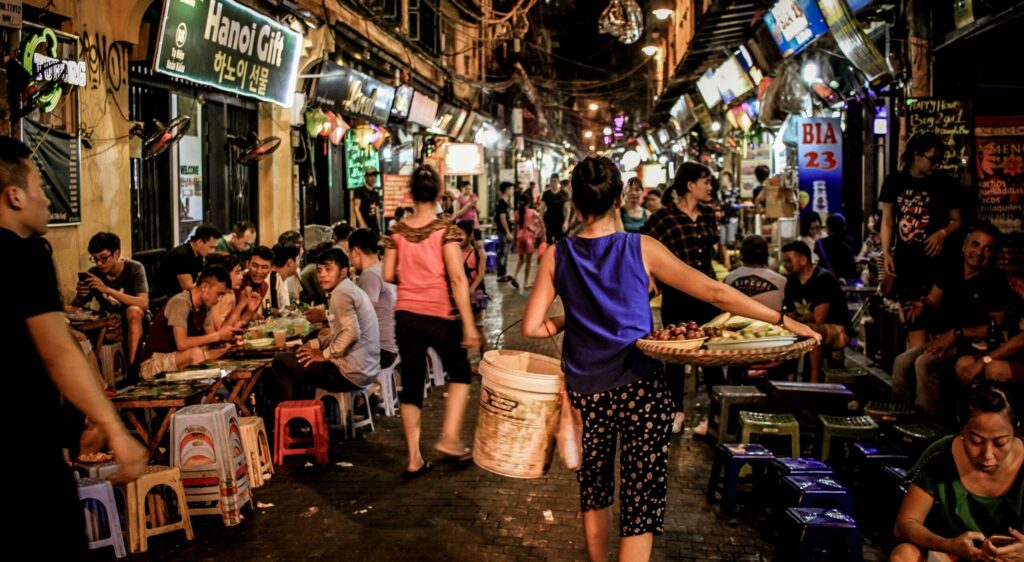
Route 1: The Classic — Hanoi to Ho Chi Minh City
Distancia: 1,700km (1,056 miles) | Duración: 14-21 days (18-21 ideal) | Direction: North to south traditionally, though some ride it in reverse | Dificultad: Moderate to Hard
Route: Hanoi → Mai Chau → Ninh Binh → Dong Hoi → Hue → Hai Van Pass → Hoi An → Quy Nhon → Nha Trang → Dalat → Ho Chi Minh City
Daily Breakdown
Days 1-4, Northern Mountains (Hanoi → Ninh Binh): 280km over 4 days, rolling to mountainous terrain, 600-800m elevation per day. Mai Chau valley, ethnic villages, limestone karsts, Tam Coc. Lush and dramatic.
Days 5-7, Central Coast (Ninh Binh → Hue): 420km over 3 days, the longest days of the tour at roughly 140km/day, mostly flat coastal roads with 200-400m elevation per day. Phong Nha caves, DMZ historical sites, beach riding. These days are built for covering ground, not lingering.
Days 8-10, Cultural Heartland (Hue → Hoi An): 142km over 3 days, 600-1,000m elevation per day (1,200m on the Hai Van Pass day). Imperial Hue, the 11km Hai Van Pass climb, descent into Hoi An. Many riders point to this stretch as the high point of the trip.
Days 11-14, Southern Coast (Hoi An → Nha Trang): 450km over 4 days, roughly 110km/day, coastal and rolling terrain at 400-700m elevation per day. Quy Nhon beaches, fishing villages, a more relaxed tropical stretch.
Days 15-17, Highland Challenge (Nha Trang → Dalat): 140km over 2 days plus a rest day in Dalat, serious sustained climbing from sea level to 1,500m. Coffee plantations, waterfalls, a colonial hill station. This is the physical peak of the tour.
Days 18-21, Final Push (Dalat → Ho Chi Minh City): 300km over 3-4 days, mostly downhill from Dalat at around 600m elevation per day. Rural scenery, then the finish in HCMC.
What Sets This Route Apart
It covers the most geographic and cultural range of any single Vietnam cycling trip: mountains, beaches, deltas, and cities; cool highlands and tropical lowlands; French colonial and ancient imperial architecture side by side; Buddhist temples, Catholic churches, and Cao Dai temples along the way. The ride also tracks a real progression, from the uncertainty of starting out, through the daily confidence-building of the middle stretch, through the two hardest tests (Hai Van Pass and the Dalat climb), to a finish in Ho Chi Minh City.
Who It’s For
Riders with solid fitness who can handle 80-120km days, with 14-21 days available, who want the complete Vietnam experience rather than a sample of it, and who don’t mind sustained physical effort spread across multiple weeks. Most riders fall between 25 and 65, commonly 35-55.
This is the route if you want to see most of the country in one trip, you’d rather go deep than sample widely, and you like the idea of a long buildup to a real finish line.
It’s not the route if you have under two weeks, you’re not confident in your fitness, or you want a trip that’s closer to leisure travel than physical effort.
Logistics
Best season: November-February is ideal (dry, cooler, 25-30°C). March-April works but runs warmer (28-32°C). May-October is rainy season with heat and humidity in the 32-36°C range and is best avoided.
Fitness needed: comfortable with 80km+ days, able to climb 800-1,200m in a day, and able to ride 12-14 consecutive days with only 2-3 rest days built in.
Typical day: wake at 6, ride from 7:30, first rest stop around 30km, lunch at 60-70km, arrival at the hotel between 90-120km around 3pm, free time, group dinner at 6:30, briefing at 8, lights out by 9.
Rest days: a 14-day tour usually has one (after Hai Van Pass); an 18-day tour has 2-3 (typically Hue, Hoi An, Dalat); a 21-day tour has 3-4.
Cost (mid-range operator): $1,800-2,500 for 14 days, $2,200-3,200 for 18-21 days, covering bike, support, hotels, most meals, guides, and entrance fees. Add roughly $25-40/day for extras. Total trip cost including everything: $2,800-4,200.
Typical inclusions: 13-20 nights’ accommodation, 13-20 breakfasts, 10-14 lunches, 8-12 dinners, bike rental, helmet, water bottles, support vehicle, English-speaking guide, mechanic support, entrance fees, and airport transfers on start/end days.
Route Variations
- Standard: Hanoi → Hoi An → HCMC, 14 days, skips the northern mountains
- Complete: the full route described above, 18-21 days
- Express: fly Hanoi to Hue, then ride Hue → Hoi An → Nha Trang → HCMC, 10-12 days
- Luxury: same route, premium hotels, smaller groups, more rest days, $250-400/day
Sample 18-Day Itinerary
- Arrive Hanoi, bike fitting, city tour
- Hanoi → Mai Chau (140km, 600m)
- Mai Chau → Ninh Binh (80km, 400m)
- Rest day in Ninh Binh (boat tour, Tam Coc)
- Ninh Binh → Dong Hoi (140km, 300m)
- Dong Hoi → Phong Nha (70km, caves, swimming)
- Phong Nha → Hue (140km, 400m, DMZ sites)
- Rest day in Hue (Imperial City, tombs, city tour)
- Hue → Lang Co (70km, 600m, coastal)
- Lang Co → Hoi An (72km, 1,200m, Hai Van Pass)
- Rest day in Hoi An (old town, tailor, cooking class)
- Hoi An → Quy Nhon (170km, 500m)
- Quy Nhon → Nha Trang (180km, 600m)
- Rest day in Nha Trang (beach, snorkeling, massage)
- Nha Trang → Dalat foothills (80km, 800m, climbing begins)
- Foothills → Dalat (60km, 1,500m, summit)
- Rest day in Dalat (waterfalls, coffee farms)
- Dalat → Di Linh (100km, mostly downhill)
- Di Linh → HCMC (180km, flat)
- HCMC city tour, celebration dinner
Total: 1,682km over 19 riding days with 4 rest days.
A Few Things Worth Knowing
Start training at least 12 weeks out, with back-to-back long weekend rides and practice eating while riding, since some days involve eating lunch on the bike. Bring 3-4 cycling outfits to wash and rotate, more chamois cream than seems necessary, and buy sunscreen locally after your first tube rather than carrying three weeks of it.
Pace yourself early. The first few days feel deceptively easy, and riders who push hard in week one often pay for it by days 8-10. Don’t skip rest days out of pride. Hai Van Pass around day 10 and the Dalat climb around days 15-16 are the two hardest stretches; respect both. And don’t rush through Hoi An if you can help it — most people wish they’d stayed an extra day.
Common mistakes: going too hard the first week, not eating enough (bonking around day 8-10 is common), skipping rest days, and being too focused on riding to take photos.
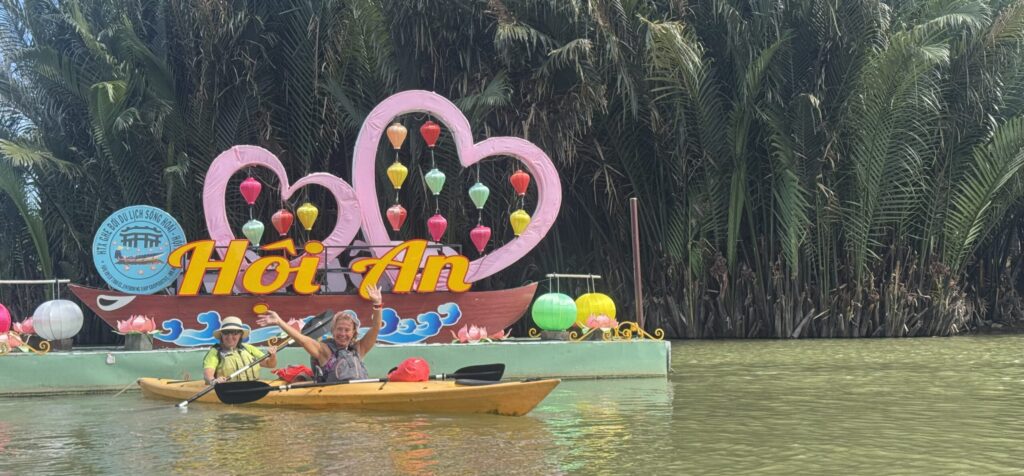
Route 2: Greatest Hits — Hue to Hoi An
Distancia: 142-350km depending on variation | Duración: 3-7 days | Direction: Hue to Hoi An, or reversed | Dificultad: Moderate
This route packs Hai Van Pass, Vietnam’s best-known cycling climb, alongside two UNESCO World Heritage sites (Hue and Hoi An) into a trip short enough for a single week. It’s also a reasonable way to find out whether you like cycle touring before committing to something longer.
Route Options
Express (3 days): Day 1, city tour and bike fitting in Hue. Day 2, Hue → Hai Van Pass → Da Nang (70km, 1,200m). Day 3, Da Nang → Hoi An (30km, flat). Total: 100km.
Classic (5 days): Day 1, arrive Hue. Day 2, Hue → Lang Co (70km, 600m, coastal). Day 3, Lang Co → Hai Van Pass → Da Nang (50km, 800m). Day 4, Da Nang → Hoi An (30km). Day 5, rest/depart. Total: 150km.
Extended (7 days): Day 1, arrive Hue. Day 2, rest day (Imperial City, tombs, Perfume River). Day 3, Hue → Bach Ma National Park (65km, 600m). Day 4, Bach Ma → Lang Co (45km, 400m, forest to beach). Day 5, Lang Co → Hai Van Pass → Da Nang (50km, 800m). Day 6, Da Nang → Hoi An (30km) plus exploration. Day 7, rest day in Hoi An. Total: 190km.
Hai Van Pass
The climb runs 11km from base to summit, gaining about 500m at an average 4.5% gradient (8% at its steepest), topping out at 496m above sea level. The road has mountains on one side and the South China Sea on the other, with views opening up gradually through a series of switchbacks. The first 3km are a gentle warm-up; the real climbing starts around km 3 and peaks in difficulty between km 7-9, before easing into the final push to the summit. The descent into Da Nang is fast and works the brakes hard.
It’s common for riders to get emotional at the top, which makes some sense given the combination of physical effort, the view, and the relief of having finished a climb that’s been built up in advance.
Who It’s For
Riders with a week or less, moderate fitness, and an interest in Vietnam’s highlights without a multi-week commitment. It works well as a first cycling tour or as a way to test whether you enjoy this kind of travel. Riders have summited Hai Van Pass anywhere from their teens to their 70s.
This is the route if you have a week, want a recognizable, photogenic climb, or want a lower-stakes trial run before booking something longer. It’s not the route if you want to see most of the country, you’re very fit and want a serious physical test (look at Ha Giang instead), or you want to avoid the more touristy parts of central Vietnam, since Hoi An draws large crowds.
Seasonal Notes
February through May is the best window: dry, with Hai Van Pass usually clear of fog and moderate temperatures (26-30°C). September through November also works, with fresher post-monsoon landscapes and fewer tourists, though it can run hot (28-32°C). June through August is rainy season and tends to fog over the pass, obscuring the views that are most of the point of riding it.
Costs
Tour prices run $300-500 for 3 days, $500-800 for 5 days, $700-1,200 for 7 days. Total trip cost including flights, visa, and extras: $1,200-1,500 budget, $1,500-2,200 mid-range, $2,200-3,000 comfort.
Fitness needed: able to ride 50-70km in a day and climb steadily for one to two hours. No athletic background required, just some determination.
Combining With Other Travel
Before the tour: 2-3 days in Hanoi, or a 2-day Ha Long Bay cruise, then fly to Hue. After: extra days in Hoi An for tailoring, beach time, or a cooking class; a flight to Ho Chi Minh City; or onward travel to the Mekong Delta or Nha Trang.
A reasonable two-week itinerary: days 1-3 Hanoi and Ha Long Bay, days 4-5 fly to Hue and explore, days 6-10 the 5-day Hue-Hoi An tour, days 11-13 Hoi An and the beach, days 14-15 fly to HCMC.
Worth Knowing
On Hai Van Pass specifically: start early (6-7am) to beat the heat, eat a real breakfast, carry at least two bottles of water, and pace yourself since the climb is longer than it looks from photos. Check your brakes before the descent.
In Hoi An, stay at least two nights, get clothes tailored (it’s genuinely good value), and consider a cooking class. In Hue, give the Imperial City at least half a day, visit the royal tombs, and try Bun Bo Hue, the local specialty.
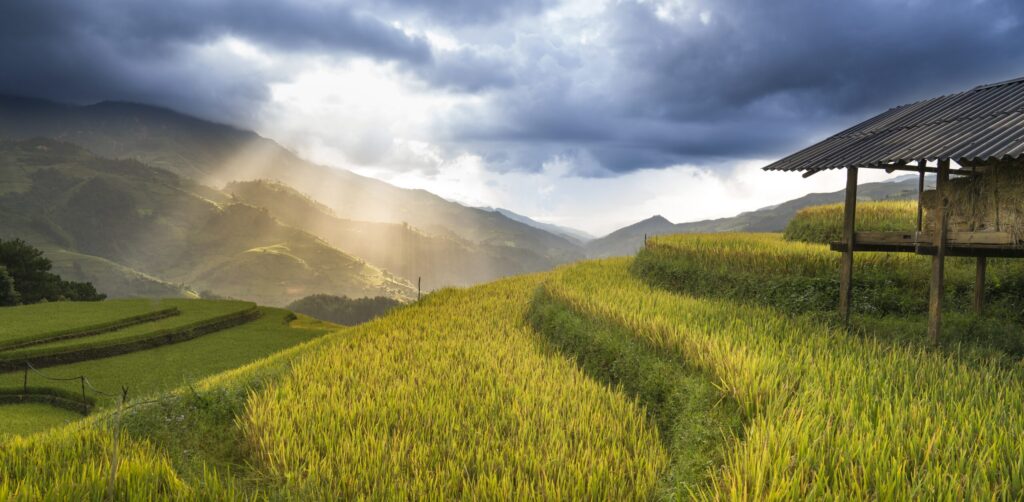
Route 3: The Challenge — Ha Giang Loop
Distancia: 350-450km | Duración: 3-5 days | Direction: Circular loop from Ha Giang town | Dificultad: Very Hard, the hardest route in Vietnam
This is Vietnam’s most dramatic cycling terrain: limestone karst mountains, multiple passes above 1,500m, H’mong, Tay, and Dao villages, and a remoteness that feels closer to genuine adventure than guided tourism.
Standard 4-Day Loop
Day 1, Ha Giang → Quan Ba → Yen Minh (80km, 1,100m elevation): the “Heaven’s Gate” viewpoint, the Twin Fairy Mountains, limestone karst formations, ethnic minority villages.
Day 2, Yen Minh → Dong Van (90km, 1,400m elevation): the hardest single day on the loop, continuous climbing through remote villages and the Dong Van Karst Plateau, a UNESCO Geopark, arriving in the frontier town of Dong Van.
Day 3, Dong Van → Meo Vac → Du Gia (75km, 1,200m elevation): Ma Pi Leng Pass, widely considered the most dramatic road in the country, with vertical cliffs dropping roughly 1,000m to the Nho Que River below. The Meo Vac market runs on Sundays if your timing lines up.
Day 4, Du Gia → Ha Giang (90km, 800m elevation, mostly downhill): a descent back to the start through corn fields, with a few hard climbs still mixed in.
Total: 335km, roughly 4,500m of elevation gain.
What Makes the Scenery Different
The terrain is almost entirely vertical: limestone karsts, terraced rice fields, river valleys cutting 1,000m below the road, and very little flat ground to recover on. Ma Pi Leng Pass is the standout, a road cut into a near-vertical cliff face with drop-offs of 500-1,000m, the Nho Que River visible far below, and clouds occasionally drifting through the valley. It’s also genuinely intimidating in places, given the narrow road and exposure.
The cultural side is just as distinct. H’mong communities here wear traditional indigo-dyed clothing, Vietnamese is often a second language in these villages, and homestays put you in actual family homes rather than tourist-oriented setups.
Who It’s For
This route demands strong fitness, multi-day climbing experience, and comfort with basic accommodations. Most riders are between 25 and 50. It rewards people who want raw adventure over comfort and who’d rather see rural Vietnam than tourist Vietnam.
It’s not the route if you’re not a confident cyclist (the descents are technical), you’re not especially fit, you want comfortable accommodations, you’re uneasy with heights, or you’d rather have beaches and flat terrain.
Why It’s Really Hard
The climbing averages around 1,125m a day, nearly double the daily average on the Hanoi-HCMC route, with passes over 1,500m and almost no flat recovery stretches. Conditions add to the difficulty: the route is remote with limited support if something goes wrong, weather is unpredictable (fog, rain, cold at altitude), and traffic includes trucks and buses on narrow roads.
It’s honest to say that some riders take the support vehicle on the hardest climbs, and some find the experience more grueling than enjoyable in the moment. That doesn’t make it a bad route, but it’s worth knowing going in.
Seasonal Notes
September through November is the best window: post-monsoon, roads dry, rice terraces golden with harvest, clear weather, and temperatures around 15-25°C at altitude. March through May also works, with flowers blooming and rice terraces being planted, though roads can be dustier. June through August brings rain and landslide risk; December through February gets genuinely cold, often 5-15°C in the mountains.
Costs
Tour prices run $150-250 budget, $300-500 mid-range, $500-800 premium for the 4-day loop, usually including basic mountain bike rental, homestay or guesthouse accommodation (often shared rooms), simple local meals, a guide, and a support vehicle. Budget another $80-140 for drinks, snacks, tips, and entrance fees at viewpoints. Including transport to and from Hanoi, total cost runs roughly $300-1,100 depending on choices.
Fitness needed: the ability to climb steadily for 1-2 hours, handle 80-100km days, and manage technical descents with confident bike handling. Recommended training is 8-12 weeks with a focus on hill climbing and back-to-back hard days.
Route Variations
A 3-day express version combines days and pushes daily distances to 100-120km; it’s not recommended unless you’re very fit and short on time. A 5-day version splits the hardest day and adds village time, and is the better choice for first-timers to this route. A 6-7 day extended version adds side trips, an extra rest day, and more homestay nights for a deeper experience. Self-guided motorbike rental is common; self-guided cycling without support is possible but not advisable for a first attempt at this route.
Worth Knowing
Pack a warm layer (mornings at altitude can hit 10°C even in summer), a rain jacket, chamois cream, sunscreen, snacks (selection in the mountains is limited), and enough cash for the whole loop since ATMs are rare. Pace yourself from day one, eat at every opportunity given the calories burned, and start climbs early while it’s cooler. On descents, brake gently rather than riding the rims hard, and slow down in fog. If a village has aggressive dogs, yelling or holding up a water bottle usually works.
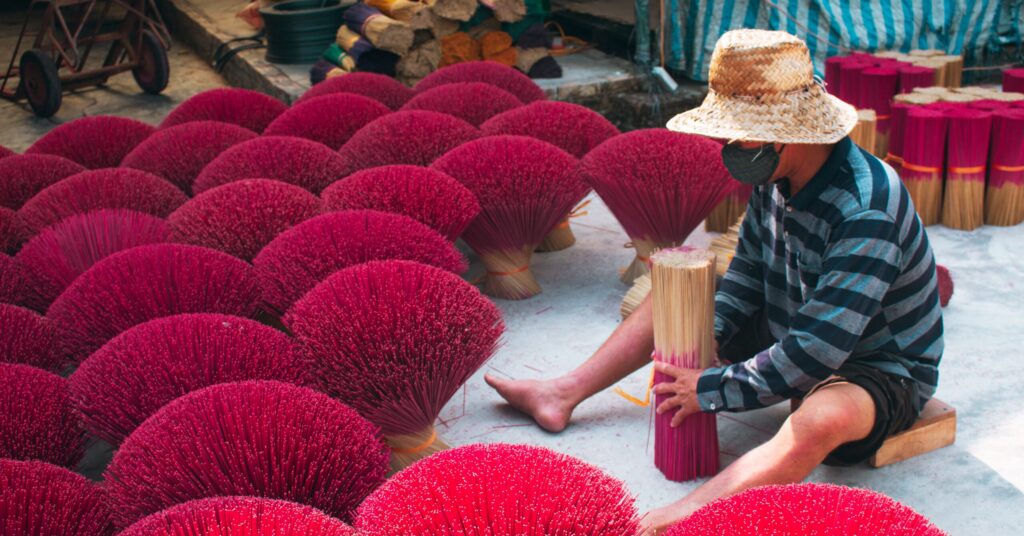
Route 4: Cultural Immersion — Mekong Delta
Distancia: 200-300km | Duración: 3-5 days | Direction: Circular loops from Can Tho or My Tho | Dificultad: Easy, the flattest route in the country
This route trades physical challenge for depth of cultural contact: homestays with real families, floating markets, and rural landscapes built almost entirely around water.
Standard 4-Day Loop (Can Tho Based)
Day 1, Can Tho → Cai Rang → Phong Dien (45km, 100m elevation): a dawn floating market visit by boat, then cycling along canals past rice paddies and fruit orchards, ending at a homestay with a farming family.
Day 2, Phong Dien → Cai Lay (70km, 150m elevation): rural cycling on narrow paths between fields, ferry crossings with bikes loaded onto small boats, a coconut candy workshop, and a rice paper demonstration.
Day 3, Cai Lay → Vinh Long (55km, 100m elevation): more canal-side riding, fruit orchard visits, a brick kiln, and a local market.
Day 4, Vinh Long → Can Tho (60km, 150m elevation): a final day of rural riding back to Can Tho, closing with a group dinner.
Total: 230km, roughly 500m of elevation, nearly flat throughout.
What Sets This Route Apart
The cultural access here goes deeper than most tours manage. Homestays put you in actual family homes rather than staged versions of them, meals are shared together, and the language barrier tends to produce more genuine moments (gestures, laughter) than it gets in the way. Floating markets start before dawn, with boats loaded with fruit and vegetables trading the way they have for generations, and breakfast often happens on the water. The landscape itself, rice paddies, coconut groves, houses on stilts, and frequent ferry crossings, sets a slow, unhurried pace that rewards lingering rather than covering distance.
Who It’s For
This is the easiest route in the country and works well for beginners to cycle touring, families with children, older riders, photographers, and anyone who’d rather prioritize culture over physical challenge. Riders here have ranged from children to people in their 70s.
It’s the route if you want to connect with local people more than chase adrenaline, you’re not especially fit but still want to cycle, or you want your kids exposed to a different culture. It’s not the route if you want dramatic scenery (the Delta is flat and pretty, not dramatic), you want a physical challenge, or you’re in a hurry, since this route rewards taking it slow.
Seasonal Notes
November through April is dry season and the right time to ride: pleasant temperatures (25-30°C), active floating markets, and fruit harvest season especially November through January. May through October is rainy season, with flooding common, heat in the 32-36°C range with high humidity, and roads that can genuinely go underwater in parts.
Costs
Tour prices run $200-350 budget, $350-550 mid-range, $550-850 premium for 4 days, typically including bike rental, 2-3 nights of homestay accommodation, all meals, boat trips, a guide, and cultural activities. Total trip cost including travel to and from: $400-700 budget, $700-1,100 mid-range, $1,100-1,600 comfort.
Cultural Experiences
Floating markets worth knowing about include Cai Rang, the largest and most well-known, and Phong Dien, smaller and quieter. Homestays put you in a family’s actual home, often with mosquito nets and a fan rather than air conditioning, and shared family meals that can run to 15 dishes. Workshops typically cover coconut candy making, rice paper production, rice wine distilling, and brick kilns.
A Typical Day
Wake around 5am for the floating market, boat out by 5:30, breakfast on the water or back on land by 7, start cycling at 8, a workshop or break around 10, lunch around noon, a rest during the heat of the day, more cycling in the cooler afternoon from 3, arrival at the homestay by 5, dinner with the family at 7:30, and an early night.
Fitness needed: minimal. The terrain is flat, distances run 45-70km a day with frequent breaks, and a support vehicle is available if you need to stop riding. Anyone who rides recreationally can manage this.
Route Variations
A 3-day express version skips some villages but keeps the highlights. A 5-day extended version adds more villages, an extra homestay night, and more workshops, and is worth it if your schedule allows. A luxury version swaps homestays for upscale hotels and adds a private chef and smaller groups, trading some authenticity for comfort. A family-friendly version shortens daily distances to 30-40km and adds more activity stops to keep kids engaged.
Worth Knowing
For homestays: remove shoes before entering, offer to help with meal prep, accept food even if you’re full, bring small gifts for kids and elders, and ask before taking photos. A tip of around 200,000 VND per night directly to the host family is reasonable. Pack modest, quick-dry clothing (villages expect shoulders and knees covered), a hat, and light layers. Bring cash, since small villages have no ATMs, and carry enough for the whole trip plus tips.
Route 5: Perfect Introduction — Northern Mini-Loop
Distancia: 200-300km | Duración: 3-5 days | Direction: Circular from Hanoi | Dificultad: Easy to Moderate
This route is built as a low-commitment way to find out whether you’ll enjoy a longer Vietnam cycling trip. It starts and ends in Hanoi, mixes flat and hilly terrain, and runs short enough that a disappointing trip costs you a few days rather than weeks.
Standard 4-Day Loop
Day 1, Hanoi → Hoa Binh (75km, 400m elevation): exiting Hanoi’s traffic, gradual climbing toward Hoa Binh, a first taste of cycling in Vietnam.
Day 2, Hoa Binh → Mai Chau (60km, 600m elevation): moderate climbing into the Mai Chau valley, an ethnic White Thai village, and a stilt-house homestay.
Day 3, Mai Chau → Ninh Binh (90km, 400m elevation): descending out of the valley into flat rice paddy riding as the Ninh Binh karsts come into view.
Day 4, Ninh Binh → Hanoi (100km, 300m elevation): an optional Tam Coc boat tour in the morning, then a flat, longer return ride back to Hanoi.
Total: 325km, roughly 1,700m elevation.
What Sets This Route Apart
The four days build deliberately: a moderate first day, a harder second day, a mostly flat and easier third day, and a long but easy fourth day to finish. In that short span you still get a city, a mountain valley, a homestay, flat rice paddy riding, and limestone karst scenery. Because it’s circular and close to Hanoi, the stakes are low: if the trip isn’t for you, you’re back where you started within four days, and support infrastructure nearby is strong.
Who It’s For
This works best for a first cycling tour, riders testing whether they want to commit to something longer, and anyone with limited vacation time who still wants variety. Most ages can manage it.
It’s the route if you’ve never done a bike tour and want to try one, or you’re not sure you’re “Vietnam fit” and want to find out before booking two weeks. It’s not the route if you’re already an experienced cycle tourist (try Ha Giang or the full north-south route instead), or you want a major physical test, since this one is intentionally introductory.
Seasonal Notes
October through April is the best window, with comfortable temperatures (20-28°C) and clear views of the karsts. May through September is rainy and hot (30-35°C with humidity) and best avoided.
Costs
Tour prices run $250-400 budget, $400-650 mid-range, $650-900 premium for 4 days. Since you’re already in Hanoi, there’s no positioning cost. Total trip cost: roughly $300-1,000 including extras. Typical inclusions are bike rental, a support vehicle, three nights’ accommodation (a mix of homestay and hotel), most meals, a guide, and entrance fees.
Highlights
Mai Chau valley is home to a White Thai ethnic minority community; homestays here put you in traditional stilt houses, sometimes with an evening dance performance and rice wine tasting. Ninh Binh’s Tam Coc area is often compared to Halong Bay on land, with a boat trip through limestone caves (rowed with the feet, which is its own experience) and the Bich Dong Pagoda built into a cave.
Worth Knowing
For first-timers: don’t overthink it, day 2 is the hardest so confidence tends to build from there, and don’t race, since pacing matters more than speed. At the Mai Chau homestay, expect mattresses on the floor and a shared, basic bathroom; earplugs help with village sounds at night. Four weeks of training with 2-3 hour rides and one hilly ride a week is generally enough preparation.
If this route feels too easy, you’re probably fitter than you thought and ready for Ha Giang or the full north-south route. If it feels too hard, the Mekong Delta is a gentler next step, or it’s worth building fitness and trying again later.
Route 6: Cross-Border Epic — Vietnam Plus Laos or Cambodia
Distancia: 600-1,200km depending on route | Duración: 7-14 days | Direction: Various | Dificultad: Moderate to Hard
This route extends a Vietnam trip into a neighboring country, crossing an international border by bike and getting a more direct sense of how the two places differ and connect.
Popular Combinations
Vietnam + Laos, Option A — Hanoi to Luang Prabang (10-12 days, 700km): Hanoi through Dien Bien Phu and Vietnam’s northern mountains, crossing into Laos and finishing in the UNESCO city of Luang Prabang.
Vietnam + Laos, Option B — Hue to Laos to the Vietnam coast (12-14 days, 850km): Hue into Savannakhet in Laos, exploring the Lao interior, then back to the Vietnam coast and Hoi An, picking up Hai Van Pass along the way.
Vietnam + Cambodia, Option C — Mekong Delta to Angkor (8-10 days, 600km): Ho Chi Minh City through the Mekong Delta, crossing into Cambodia, finishing at Angkor Wat.
Vietnam + Cambodia, Option D — Full Mekong Adventure (12-14 days, 900km): starting in Luang Prabang, following the Mekong River through Cambodia, and ending in Ho Chi Minh City.
Why This Appeals to Some Riders
Riding through neighboring countries on the same trip makes the contrasts more visible: French colonial influence shows up differently in each, Buddhism is expressed differently, and pace of life and food traditions shift noticeably. The Mekong River links all three countries geographically, and the mountains along the Vietnam-Laos border give way to Cambodia’s lowlands, which makes the region feel more like a connected whole than three separate destinations.
Who It’s For
This suits experienced travelers, ideally not on their first international trip, with solid fitness since multi-country logistics tend to leave less built-in rest. It works well if you’re curious about regional contrasts and want to make the most of a longer trip, typically three weeks or more, and most riders are between 25 and 60.
It’s not the route for a first cycling tour, since the added border logistics complicate things, and it’s not ideal if you’d rather go deep in one place than cover ground across several.
Logistics
Visas: Vietnam ($25 e-visa or visa-free for some nationalities), Laos ($30-42 on arrival, varies by nationality), Cambodia ($36 e-visa or $30 on arrival). Total visa costs run roughly $55-108.
Border crossings: not every border is open to cyclists, so the tour operator’s experience with this specific routing matters. Bring extra passport photos and cash (USD is commonly accepted), and expect crossings to take one to three hours.
Currency: Vietnamese Dong, Lao Kip, and Cambodian Riel (though USD is widely accepted in Cambodia), so plan for multiple ATM stops.
Support: some operators swap vehicles or guides at the border; others run with international permits throughout. Either way, an operator with direct cross-border experience matters more here than almost any other route decision.
Costs
Tour prices for 10-14 days run $1,500-2,500 mid-range, $2,500-4,000 premium, with visa costs adding $55-108. Given the added logistics, budget options aren’t really practical here. Total trip cost: $2,500-4,000 mid-range, $4,000-6,000 comfort.
Worth Knowing
Bring extra passport photos (2-4) and cash for the border crossings, and expect some delay and inconvenience as a normal part of the process rather than a sign something’s wrong. Choose an operator specifically for their cross-border experience, ask directly about border procedures, and check reviews for mentions of how border crossings actually went. Bring a universal power adapter, since plug types can differ between countries.
Decision Trees
By Time Available
3-5 days: Hue to Hoi An (challenge plus culture), Mekong Delta (culture plus ease), Northern Mini-Loop (a sampler), or Ha Giang (if you’re fit and want mountains).
7-10 days: the 7-day Hue-Hoi An extended route, Ha Giang combined with Hanoi city time, Mekong Delta combined with HCMC, or the Cambodia cross-border option (Mekong to Angkor).
14-21 days: the full Hanoi-to-HCMC route, Ha Giang combined with Hanoi-to-Hoi An, a full cross-border trip, or Mekong combined with Hanoi-to-Hoi An.
3-4 weeks: the full Hanoi-to-HCMC route at a relaxed pace with rest days, a Vietnam-plus-neighbor trip with extended time, or all three shorter routes (Ha Giang, Hue-Hoi An, Mekong) combined.
By Fitness Level
New to cycling or not very fit: Mekong Delta, Northern Mini-Loop, or the 5-7 day Hue-Hoi An route.
Moderately fit, recreational cyclist: Hue to Hoi An, Northern Mini-Loop, the full north-south route with training, or Mekong Delta if culture matters more than challenge.
Very fit, experienced cyclist: Ha Giang Loop, the full north-south route, a cross-border trip, or multiple routes combined.
Athlete-level fitness, wants a serious test: Ha Giang Loop, Ha Giang combined with the full north-south route, or a self-guided version of the north-south route.
By Priority
Scenery: Ha Giang Loop is the most dramatic, Hue to Hoi An has Hai Van Pass and the coast, the Northern Mini-Loop offers the most variety in a short trip.
Cultura: Mekong Delta goes deepest, the cross-border routes let you compare cultures directly, and the full north-south route covers the most cultural ground overall.
Physical challenge: Ha Giang Loop is hardest, the full north-south route sustains it longest, and the Dalat climb within that route is a specific standout test.
Wanting all three: the full Hanoi-to-HCMC route, or combining Ha Giang with Hue-Hoi An as two separate trips.
By Travel Style
Comfort and ease: Mekong Delta, or Hue to Hoi An booked with a premium operator.
Adventure and challenge: Ha Giang Loop, the full north-south route, or a self-guided option for maximum independence.
Cultural depth: Mekong Delta, a cross-border trip, or an extended tour with more village time.
Testing whether cycle touring suits you: the Northern Mini-Loop, the 5-day Hue-Hoi An route, or Mekong Delta.
Seasonal Considerations
Vietnam’s north and south have different weather patterns, so timing depends on which route you’re riding.
Route | Best Months | Good Months | Evita | Why |
Hanoi → HCMC | Nov-Feb | Mar-Apr, Oct | May-Sep | needs dry weather across the full length |
Hue → Hoi An | Feb-May | Sep-Nov, Dec-Jan | Jun-Aug | needs clear views on Hai Van Pass |
Ha Giang Loop | Sep-Nov, Mar-May | Apr, Oct | Dec-Feb (cold), Jun-Aug (rain) | post-rain scenery, dry and safe roads |
Mekong Delta | Nov-Apr | Oct, May | Jun-Sep | dry season prevents flooding |
Northern Mini-Loop | Oct-Apr | May, Sep | Jun-Aug | comfortable northern temperatures |
Cross-Border | Nov-Mar | Apr, Oct | May-Sep | two countries means more complex weather |
November-February (peak season): best for the full Hanoi-HCMC route, Mekong Delta, and cross-border routes. North runs cool and dry (15-25°C, sometimes foggy), central is pleasant (22-28°C), south is warm and dry (25-32°C). Reliable weather and dry roads come with the trade-off of crowds and higher prices.
March-May (shoulder season): best for Hue-Hoi An and Ha Giang. North warms up (20-30°C), central gets hot (28-35°C), south runs very hot (30-36°C). Fewer crowds and lower prices, with Ha Giang’s rice terraces freshly planted and green, though the south gets uncomfortably hot.
June-August (low season): generally worth avoiding across most routes. Rain is regular in all three regions, roads get slippery, Ha Giang risks landslides, the Mekong floods, and views are often obscured by cloud. If it’s the only time you can travel, it’s workable with the right gear and a flexible itinerary.
September-October (second shoulder season): good for Ha Giang (post-rain, golden harvest terraces) and the northern routes generally, with temperatures cooling and fewer tourists, though early October can still bring rain.
Budget Comparisons
These figures include flights, tour cost, visa, and incidental spending.
Route 1: Hanoi → HCMC, 18 days
Category | Budget | Mid-Range | Comfort |
Flights (US) | $700 | $800 | $1,000 |
Tour price | $1,800 | $2,500 | $4,000 |
Visa | $25 | $25 | $25 |
Insurance | $100 | $150 | $200 |
Pre/post hotels | $60 | $150 | $300 |
Meals not included | $60 | $120 | $200 |
Drinks/snacks | $50 | $100 | $150 |
Tips | $80 | $100 | $150 |
Extras | $50 | $100 | $200 |
Total | $2,925 | $4,045 | $6,225 |
Route 2: Hue → Hoi An, 5 days
Category | Budget | Mid-Range | Comfort |
Flights (US) | $700 | $800 | $1,000 |
Positioning flights | $100 | $100 | $150 |
Tour price | $400 | $650 | $900 |
Visa | $25 | $25 | $25 |
Insurance | $80 | $100 | $150 |
Pre/post hotels | $80 | $200 | $400 |
Meals not included | $40 | $80 | $150 |
Drinks/snacks | $30 | $50 | $80 |
Tips | $40 | $50 | $80 |
Extras | $30 | $80 | $150 |
Total | $1,525 | $2,135 | $3,085 |
Route 3: Ha Giang Loop, 4 days
Category | Budget | Mid-Range | Comfort |
Flights (US) | $700 | $800 | $1,000 |
Positioning (bus) | $30 | $30 | $50 |
Tour price | $200 | $400 | $650 |
Visa | $25 | $25 | $25 |
Insurance | $80 | $100 | $150 |
Pre/post hotels | $50 | $120 | $250 |
Meals not included | $30 | $50 | $80 |
Drinks/snacks | $30 | $50 | $80 |
Tips | $30 | $50 | $80 |
Extras | $30 | $50 | $100 |
Total | $1,205 | $1,675 | $2,465 |
Route 4: Mekong Delta, 4 days
Category | Budget | Mid-Range | Comfort |
Flights (US) | $700 | $800 | $1,000 |
Tour price | $300 | $450 | $700 |
Visa | $25 | $25 | $25 |
Insurance | $80 | $100 | $150 |
Pre/post hotels | $60 | $150 | $300 |
Meals not included | $25 | $40 | $80 |
Drinks/snacks | $25 | $40 | $60 |
Tips | $40 | $60 | $100 |
Extras | $30 | $60 | $120 |
Total | $1,285 | $1,725 | $2,535 |
Ways to Cut Costs
On flights: book 60-90 days out, stay flexible on dates by a few days (can save $200-400), consider a one-stop flight to save $100-300 if you don’t mind a longer trip, and fly midweek where possible.
On the tour itself: watch for low-season promotions, ask about group discounts for four or more people traveling together, and consider shoulder-season pricing in March-April or September-October.
On the ground: eat street food for meals not included in the tour, stay in hostels before and after rather than hotels, go easy on souvenirs, and drink local beer over imported.
Generally, it’s worth spending on tour quality, since safety, guides, and bikes are where corners shouldn’t be cut, and saving on the things around the tour: hotels before and after, meals out, souvenirs.
Combining Routes
The Mountain-Coast Combination: Ha Giang Loop + Hue to Hoi An
Roughly 14-15 days total. Arrive Hanoi and recover (days 1-2), ride Ha Giang (days 3-6), rest and travel (day 7), fly to Hue (day 8), ride the extended Hue-Hoi An route (days 9-15), rest in Hoi An and depart or continue (days 16-17).
This pairing gives you both dramatic remote mountains and the iconic coastal route, with two genuinely different challenges, in a manageable two weeks. Cost: roughly $2,800-4,500 mid-range.
The Complete Cultural Combination: Northern Mini-Loop + Hue to Hoi An + Mekong Delta
Roughly 16-17 days total. Northern Mini-Loop from Hanoi (days 1-4), rest and fly to Hue (day 5), ride Hue-Hoi An (days 6-10), fly to HCMC (day 11), ride Mekong Delta (days 12-15), explore HCMC and depart (days 16-17).
This covers north, central, and south Vietnam without an extreme physical test anywhere in the mix. Cost: roughly $3,200-5,000 mid-range.
The Maximum Combination: Ha Giang Loop + Full Hanoi to HCMC
Roughly 24-25 days total. Arrive Hanoi (days 1-2), ride Ha Giang (days 3-6), recover (days 7-8), ride the full north-south route (days 9-26), explore HCMC and depart (days 27-28).
This combines both of Vietnam’s hardest physical tests, the Ha Giang climbs and the Dalat ascent, into one trip. It requires 3-4 weeks, strong fitness, and real mental resilience. Cost: roughly $4,500-7,500 mid-range.
The Cross-Regional Combination: Mekong Delta + Ha Giang Loop + Hue to Hoi An
Roughly 17-18 days total. Mekong Delta as an easy start (days 1-4), fly to Hanoi (day 5), Ha Giang as a sharp contrast (days 6-9), recover (days 10-11), fly to Hue (day 12), Hue-Hoi An as the finish (days 13-17).
This sequences flat, mountains, and coast in a deliberately progressive order: easy, then hard, then moderate. Cost: roughly $3,500-5,500 mid-range.
Practical Notes on Combining Routes
Internal flights run $35-85 each; budget for two to four of them depending on the combination. Build in 1-2 rest days between routes rather than going straight from one into the next. Using the same tour operator across routes, where possible, simplifies logistics considerably, and some operators offer discounts for booking multiple routes together.
Quick Recommendations
One week, want a good introduction: Hue to Hoi An (5-7 days) for a solid balance of challenge, culture, and a recognizable highlight.
Not very fit, want deep culture: Mekong Delta (4-5 days) for the easiest riding and the most direct contact with local life.
Experienced cyclist wanting a real test: Ha Giang Loop (4-5 days) for the hardest climbing and the most dramatic scenery.
First bike tour, testing the waters: Northern Mini-Loop (4 days), circular from Hanoi and low-stakes.
Two to three weeks, want the full picture: the full Hanoi-to-HCMC route (18-21 days).
Want to see more than one country: the cross-border option (10-14 days) into Laos or Cambodia.
Traveling with kids: Mekong Delta (3-4 days), flat and safe with homestays kids tend to enjoy.
First major adventure trip: the extended 7-day Hue-Hoi An route, for an achievable challenge with a real high point at Hai Van Pass.
Tight budget: Ha Giang Loop or Mekong Delta at 3-4 days, both shorter and cheaper without losing much of what makes them worthwhile.
Want striking photos and a good story: Ha Giang Loop for the scenery, or Hue to Hoi An for the Hai Van Pass summit.
Resources
Operators to research further (see the Operator Selection Guide for how to evaluate them): SpiceRoads, Grasshopper Adventures, and Skedaddle cover most routes at the premium-to-mid-range end. Vietnam Bike Tours and other Vietnamese-owned local operators are worth checking for budget options.
Further research: CrazyGuyOnABike.com for rider trip journals, TripAdvisor for operator-specific reviews, and r/bicycletouring on Reddit for direct questions to people who’ve done these routes.
Closing Thoughts
There isn’t a single “best” route here, just the one that fits your time, fitness, and what you’re actually looking for. If you train properly, pick a solid operator, and stay open to some discomfort along the way, most people come back from any of these six routes glad they did it.
Related Reading:
The Operator Selection Guide for choosing a tour company.
