
What You'll Find in This Article
The question underneath most pre-trip nerves about a Vietnam cycling tour isn’t really about bikes or hotels or WiFi. It’s something closer to: what happens if I crash, or get sick, or end up needing real help, far from home and from anyone who speaks my language? It’s a reasonable thing to worry about, and it deserves a real answer rather than blanket reassurance.
A Note on the Odds
Serious incidents on well-run Vietnam cycling tours are genuinely uncommon, though it’s worth being honest that this isn’t because Vietnam presents no real challenges — traffic, heat, and unfamiliar terrain are all real factors. It’s because professional operators run systems specifically built to prevent incidents and to manage them quickly when they do occur. The more useful question isn’t whether something could go wrong, but what actually happens when it does.
Scenario 1: A Mechanical Failure
The most common “something goes wrong” moment is mundane: a chain snaps, a tire shreds, a derailleur bends. On most multi-day tours, at least one mechanical happens somewhere along the way.
A rider stops safely on the roadside, and the sweep guide — who rides behind the last rider at all times — typically reaches them within a minute or two. Most mechanicals are fixable roadside in 5-15 minutes. If it isn’t fixable on the spot, the support vehicle brings a pre-adjusted spare bike, and the rider is moving again within minutes while the original bike goes into the vehicle for repair later. The group generally doesn’t even need to stop, since the lead guide keeps things moving while the sweep handles the issue and the rider rejoins at the next regroup point.
Scenario 2: A Minor Crash
Low-speed crashes happen occasionally — a moment of lost concentration, clipping a curb. Guides are trained to secure the scene first (stopping traffic if needed), assess the rider for consciousness and obvious injury, and then provide appropriate care, most commonly cleaning and dressing road rash, the most frequent injury type. Most crashes end in scrapes, bruises, and some wounded pride, with the rider patched up and given time to recover emotionally before continuing, either back on the bike or in the support vehicle until ready.
Scenario 3: A Genuine Medical Emergency
This is the scenario that understandably worries people most — heat stroke, a severe allergic reaction, a cardiac event. The response from a trained team escalates immediately and follows a practiced sequence: the lead guide reaches the rider and begins assessment and immediate care, the sweep guide secures the scene and manages the rest of the group, and the driver calls emergency services with GPS coordinates pulled from the day’s route card and basic medical history from the client file. The operations base gets notified and begins coordinating hospital communication, insurance, and family notification in parallel. A staff member accompanies the rider to the hospital and stays in contact with the base throughout.
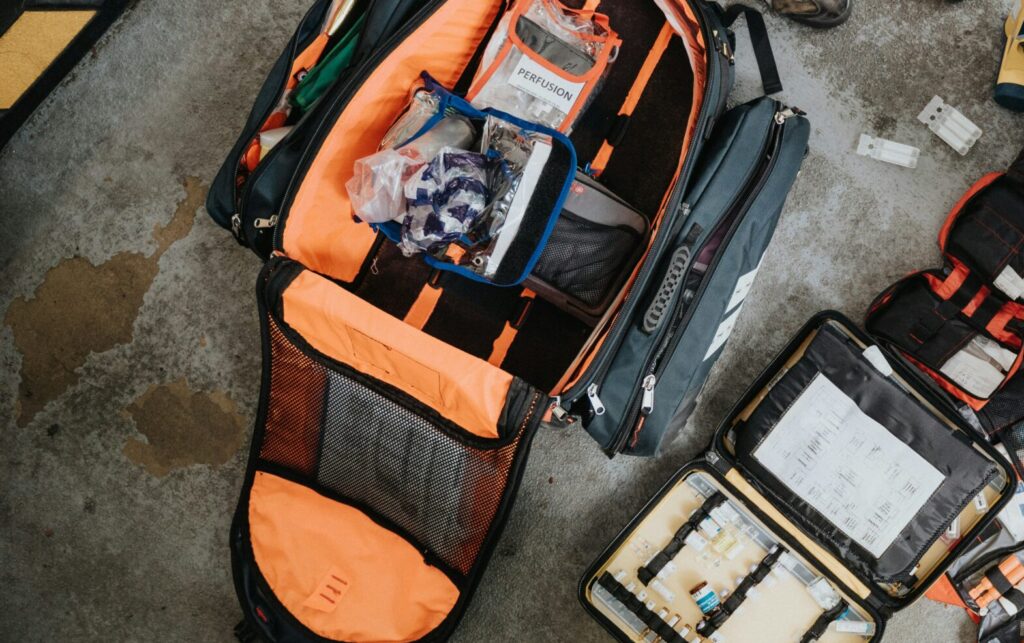
What makes this work is that none of it is improvised in the moment. Hospital locations are pre-mapped for every section of the route, emergency numbers are on a laminated card every guide carries, staff roles are pre-assigned, and insurance protocols are established well before a tour ever starts. The team is executing a plan they’ve practiced, not figuring one out under pressure.
Scenario 4: A Weather Emergency
Tropical storms and flash flooding can develop quickly in Vietnam. Guides monitor conditions continuously — checking forecasts at the morning briefing, watching the sky during the ride, getting alerts on their phones — and the response scales with severity: rain gear and reduced pace for light rain, immediate shelter for heavy rain (Vietnamese storms often pass within an hour), all riders off bikes and into substantial shelter for lightning with a 30-minute wait after the last thunder before resuming, and a full stop with no crossing for flooding on the road. If conditions make continuing impossible, the day’s plan adapts — a section gets ridden the next day, or the group drives past an impassable stretch — rather than pushing through.
The Real Difference Between Operators
Everything described above assumes a professional operator running real systems. Lower-cost operators often cut exactly the pieces that make a fast, effective response possible: no dedicated sweep guide, which means a struggling rider can go unnoticed considerably longer; a thin first aid kit with band-aids and little else; no pre-mapped hospital locations, meaning someone searches a map app while a situation is unfolding; and no rehearsed protocol, meaning staff improvise rather than execute something they’ve practiced.
This is the real difference between a budget tour and a more expensive one — not the thread count on the hotel sheets, but what’s actually in place for the day something goes wrong. Worth asking directly when comparing operators: what first aid certification do the guides hold (ideally something like Wilderness First Responder, not just basic CPR); is there always a dedicated sweep guide behind the last rider; what medical equipment does the support vehicle actually carry; and what’s the specific protocol for a serious medical emergency. Vague or evasive answers to any of these are worth taking seriously as a warning sign.
The Honest Answer
There’s no way to guarantee nothing will go wrong on a cycling tour through unfamiliar terrain in a different climate, and any operator claiming otherwise isn’t being fully honest. What a quality operator can offer is a real safety net: trained staff, mapped hospitals, practiced protocols, and the equipment to respond quickly — a system that, with real luck, you’ll never need to see in action, but that’s there if you do. The fear behind the original question is reasonable; the right response to it isn’t to dismiss the risk, but to choose an operator that manages it seriously.
