
Every rider who books a Vietnam cycling tour with us gets this guide, whether they’re starting sixteen weeks out with a clean training calendar or signing up four weeks before departure with whatever fitness they currently have. It’s the same document either way, because the goal isn’t to gatekeep good preparation behind an ideal timeline. It’s to give people an honest, specific picture of what their chosen route will actually ask of their body, and a realistic plan for getting ready given the time they have.
The guide breaks down by route because “training for a Vietnam cycling tour” isn’t one thing. Riding the Mekong Delta is a different physical problem than riding the Ha Giang Loop. The Delta is flat and humid, and the real opponent there is heat, not terrain. Ha Giang is the opposite: serious sustained climbing, technical descents, and a daily elevation profile that would be considered hard cycling almost anywhere in the world. A rider who trains generically for “cycling in Vietnam” without knowing which of these problems they’re actually solving tends to either over-prepare for the wrong thing or show up genuinely unprepared for the thing that matters.
We also built in a real range of preparation windows, from sixteen weeks down to under four, because most people don’t book trips with perfect lead time. Someone who decides to do this with five weeks of notice shouldn’t be left without guidance just because they missed the ideal training arc. The plans for shorter windows are honest about their limits: they won’t get anyone to peak fitness, but they will get a rider to the point where they can handle most days comfortably and know when to use the support vehicle without feeling like they’ve failed at something.
That last point matters enough that we built an entire section around it. A lot of cycling guidance, ours included in earlier drafts, treats the support van as a backup plan for people who couldn’t hack it. We don’t think that’s accurate or useful. Riders who plan to use support strategically, rather than treating it as an emergency-only option, tend to enjoy these trips more and finish them in better shape than riders who try to grind through every kilometer regardless of how they feel that day.
We’re sharing this publicly, not just with people who’ve already booked with us, for the same reason we published our operations manual. Most people considering a cycling trip in Vietnam, with us or with anyone else, don’t have a clear sense of what the heat, the climbing, or the back-to-back days will actually feel like until they’re standing in front of them. Good preparation isn’t proprietary information worth protecting. It’s the difference between someone having a trip they remember well and one they spend mostly suffering through, and we’d rather more people land on the first outcome, regardless of which operator they end up choosing.
Vietnam Cycling Tour Training Plans
Prepare Your Body for the Adventure of a Lifetime
How to use this guide: Select your Vietnam route and available training time, then follow the corresponding plan to arrive confident, strong, and ready to enjoy every kilometer.
Understanding Your Route’s Demands
Before choosing your training plan, understand what your chosen Vietnam route will ask of your body.
Route Difficulty Matrix
Route | Duration | Daily Avg Distance | Daily Avg Climbing | Difficulty | Key Challenge |
Hanoi → Ho Chi Minh (Full) | 14-21 days | 70-90 km | 400-800m | Moderate-Challenging | Sustained effort, heat, cumulative fatigue |
Hue → Hoi An (Central Coast) | 3-7 days | 40-60 km | 300-500m | Moderate | Hai Van Pass climb (11km, 500m gain) |
Ha Giang Loop | 3-5 days | 60-80 km | 800-1200m | Challenging | Steep sustained climbs, technical descents |
Mekong Delta | 3-5 days | 40-60 km | 50-150m | Easy | Heat and humidity, minimal climbing |
Northern Loop (Hanoi-Mai Chau-Ninh Binh) | 3-5 days | 50-70 km | 300-600m | Easy-Moderate | Rolling terrain, moderate climbs |
Cross-Border (Hanoi → Luang Prabang) | 10-14 days | 70-90 km | 600-1000m | Challenging | Long mountain days, remote sections |
Fitness Requirements by Route

Easy Routes (Mekong Delta): – Can ride 40km comfortably – Basic cardiovascular fitness – No specific climbing ability needed – Comfortable in heat
Moderate Routes (Hue-Hoi An, Northern Loop, Full North-South): – Can ride 60km with modest breaks – Can climb for 30-45 minutes continuously – Comfortable riding 5-6 days consecutively – Good heat tolerance
Challenging Routes (Ha Giang, Cross-Border): – Can ride 80km+ with elevation – Can climb sustained grades for 60+ minutes – Strong technical descending skills – Multi-day back-to-back effort tolerance
Training Plans by Preparation Time
Quick Selection Guide
Select based on how many weeks until your tour: – 16+ weeks available: Optimal Preparation Plan — build from foundation – 12 weeks available: Standard Preparation Plan — balanced approach – 8 weeks available: Accelerated Plan — compressed but effective – 4-6 weeks available: Last-Minute Plan — focused on risk reduction – Under 4 weeks available: Minimal Preparation — make the best of the time you have
16-WEEK OPTIMAL PREPARATION PLAN
Ideal para: Anyone booking 4+ months in advance, riders wanting peak performance, those returning to cycling after time off
Philosophy: Build systematically from aerobic base through specific tour preparation
PHASE 1: Base Building (Weeks 1-6)
Goal: Establish aerobic foundation and consistent riding habit
Week 1-2: Orientation – Frequency: 3 rides per week – Duration: 30-45 minutes per ride – Intensity: Easy (conversational pace, able to speak in full sentences) – Types: 2x flat easy rides, 1x slightly rolling terrain – Complementary: 2x 20-minute walks, 1x yoga or stretching session
Week 3-4: Duration Increase – Frequency: 3-4 rides per week – Duration: 45-60 minutes per ride – Intensity: Mostly easy, one ride with some tempo effort – Types: 2x easy flat rides (60 min), 1x rolling terrain (45 min), 1x “tempo ride” — 45 min including 3x 5-min efforts at moderate-hard pace – Complementary: 2x 30-minute walks or easy jogs, 1x core strength workout (15 min)
Week 5-6: Building Volume – Frequency: 4 rides per week – Duration: 60-90 minutes per ride – Long Ride: Introduce weekend long ride (90 min) – Types: 2x easy rides (60 min), 1x hilly ride (60 min with climbing), 1x long easy ride (90 min) – Complementary: 1x strength training (focus: legs, core), 1x flexibility work
Phase 1 Milestone Test (End of Week 6): Ride 2 hours at comfortable pace with 300m climbing. If you complete this feeling strong, proceed to Phase 2. If struggling, repeat weeks 5-6 before advancing.
PHASE 2: Building Strength (Weeks 7-10)
Goal: Develop climbing strength and increase sustained effort capacity
Week 7-8: Hill Introduction – Frequency: 4-5 rides per week – Tuesday, Hill Repeats: warm up 15 min, 4x 5-min climbs at moderate-hard effort (3 min recovery between), cool down 15 min. Total: 60 min. – Thursday, Tempo Ride: warm up 15 min, 3x 10-min at “comfortably hard” pace (5 min easy between), cool down 15 min. Total: 75 min. – Saturday, Long Ride: 2.5-3 hours easy pace, including rolling terrain; practice eating and drinking while riding. – Sunday (optional), Easy Spin: 45-60 min very easy recovery pace.
Week 9-10: Increasing Climbing Volume – Frequency: 4-5 rides per week – Tuesday, Extended Hill Repeats: warm up 15 min, 5x 6-min climbs at moderate effort (2 min recovery), cool down 15 min. Total: 70 min. – Thursday, Sustained Climb: find a 30-40 min sustained climb, ride at steady “all-day” pace, practice pacing and nutrition. Total: 90 min with warm-up/cool-down. – Saturday, Long Ride with Elevation: 3-3.5 hours, including 500-700m elevation gain; practice Vietnam tour pacing (never too hard). – Sunday, Active Recovery: 60 min easy spin or brisk walk. – Complementary: 2x strength training per week (focus: single-leg work, core stability), 1x yoga or stretching session.
Phase 2 Milestone Test (End of Week 10): Ride 3.5 hours with 600m climbing at conversational pace. You should feel you could continue another hour if needed.
PHASE 3: Tour-Specific Preparation (Weeks 11-14)
Goal: Simulate tour conditions, build back-to-back day capacity
Week 11-12: Multi-Day Simulation – Frequency: 5-6 rides per week – Weekend block: Friday, 60-90 min moderate ride with hills. Saturday, 4 hours, 70-80km, 600-800m climbing. Sunday, 3 hours, 50-60km despite tired legs. This simulates tour demands: riding when not fully fresh. – Midweek: Tuesday, Interval Work — warm up 15 min, 6x 3-min hard efforts (Hai Van Pass simulation), 3 min easy recovery between, cool down 15 min. Thursday, Endurance Ride — 2 hours steady riding, practice tour nutrition strategy.
Week 13-14: Peak Training – Frequency: 5-6 rides per week – Weekend longest ride: Saturday, 4.5-5 hours, 80-100km, 800-1000m climbing. Sunday, 2-3 hours easy recovery pace. – Midweek: Tuesday, Power Climbs — 5x 8-min climbs at tour pace, focus on staying comfortable, not pushing hard. Wednesday, Easy Ride — 60 min recovery. Thursday, Tempo Session — 90 min with 3x 15-min tempo efforts. Friday, rest or 30 min easy spin. – Heat Training (if possible): Weeks 11-14, ride during the warmest part of the day 2x per week; overdress slightly to simulate tropical humidity; practice aggressive hydration (see Heat Acclimatization section).
Phase 3 Milestone (End of Week 14): Complete 3 consecutive days: 4hr, 3hr, 2.5hr rides. This measures your capacity for back-to-back efforts.
PHASE 4: Taper & Refinement (Weeks 15-16)
Goal: Arrive fresh, confident, and ready
Week 15: Reduce Volume, Maintain Intensity – Total riding: 7-8 hours (down from 10-12) – Tuesday: 60 min with 4x 5-min efforts. Thursday: 90 min easy-moderate. Saturday: 3 hours with some climbing. Sunday: 60 min recovery.
Week 16 (Tour Week): Minimal Riding – Monday-Tuesday: 45 min easy spin (keep legs loose) – Wednesday: 30 min easy + 3x 2-min openers (wake up the legs) – Thursday-Friday: rest or 20 min very easy spin – Saturday: travel day – Sunday: tour begins
12-WEEK STANDARD PREPARATION PLAN
Ideal para: Most riders booking 3 months ahead, those with moderate current fitness
Philosophy: A compressed version of the 16-week plan, with less base building and faster progression
Phase 1: Quick Base (Weeks 1-4) – Week 1-2: 3 rides per week, 45-60 minutes per ride, all easy pace. Goal: re-establish riding habit. – Week 3-4: 4 rides per week, 60-90 minutes per ride; include one 2-hour ride by end of week 4; add one hilly ride per week. – Milestone: 2-hour ride with 300m climbing.
Phase 2: Build Strength (Weeks 5-8) – Week 5-6: Tuesday, hill repeats (5x 5-min moderate climbs). Thursday, tempo (2x 15-min efforts). Saturday, long ride (2.5-3 hours). Sunday (optional), 60 min easy. – Week 7-8: Tuesday, 6x 6-min hill efforts. Thursday, sustained 30-40 min climb. Saturday, 3.5-4 hours with 600-800m climbing. Sunday, 90 min easy recovery. – Milestone: 4-hour ride with 700m climbing.
Phase 3: Tour Preparation (Weeks 9-11) – Week 9-10, weekend block: Saturday, 4 hours, 70-80km. Sunday, 2.5-3 hours (tired legs practice). Midweek: Tuesday, 6x 4-min hard efforts. Thursday, 2 hours steady. – Week 11, peak week: Saturday, longest ride — 5 hours, 80-100km. Sunday, 2.5 hours recovery pace. Tuesday, 5x 8-min tour-pace climbs. Thursday, 90 min tempo. – Milestone: 3 consecutive days of 3+ hour rides.
Phase 4: Taper (Week 12) – Cut volume by 40%. Tuesday: 60 min with 4x 5-min efforts. Thursday: 90 min easy-moderate. Saturday: 2.5 hours with climbing. Final days: easy spins and rest.
8-WEEK ACCELERATED PREPARATION PLAN
Ideal para: Fit riders booking 2 months out, those with a recent cycling or cardio base
This plan assumes you can currently ride 60+ minutes comfortably. If not, use the 4-6 week Last-Minute Plan instead.
Phase 1: Quick Build (Weeks 1-3) – Week 1: Monday, 60 min easy. Wednesday, 60 min easy with 3x 5-min tempo. Friday, 60 min easy. Saturday, 2 hours with some hills. Sunday, rest or 45 min recovery spin. – Week 2: Tuesday, hill repeats (6x 4-min climbs). Thursday, 90 min steady. Saturday, 3 hours with 400-500m climbing. Sunday, 90 min easy. – Week 3: Tuesday, 5x 6-min hill efforts. Thursday, 2 hours with 3x 10-min tempo. Friday, 60 min easy. Saturday, 4 hours with 600m climbing. Sunday, 2 hours easy recovery.
Phase 2: Peak Training (Weeks 4-6) – Week 4: Tuesday, 90 min with hills. Thursday, 2 hours tempo riding. Saturday, 4.5 hours, 70-80km, 700m climbing. Sunday, 3 hours despite fatigue. – Week 5: Tuesday, 6x 8-min sustained climbs. Wednesday, 60 min easy. Thursday, 2.5 hours steady. Saturday, longest ride — 5 hours, 80-100km, 800m climbing. Sunday, 2.5 hours recovery. – Week 6: Weekend block — Saturday 4 hours, Sunday 3 hours. Tuesday, 5x 6-min climbs at tour pace. Thursday, 2 hours with varied terrain.
Phase 3: Taper (Weeks 7-8) – Week 7: cut total hours by 30%, maintain some intensity, focus on feeling fresh. – Week 8: minimal riding, final equipment checks, rest and travel.
4-6 WEEK LAST-MINUTE PREPARATION PLAN
Ideal para: Late bookings, riders with decent general fitness but limited cycling-specific prep time
Four to six weeks isn’t ideal, but you can prepare adequately if you’re already somewhat active (walking, gym, other sports), train consistently, keep your expectations realistic (you may not ride every kilometer), and trust the support vehicle when you need it.
Vietnam tours have support built in, so you don’t need elite fitness. You need to be comfortable on a bike for 2-3 hours, able to climb moderately for 20-30 minutes, reasonably heat-tolerant, and willing to use the van when it makes sense.
6-Week Crash Course – Week 1-2: 4 rides per week, building from 45 to 90 minutes. Monday 45 min easy, Wednesday 60 min with some hills, Friday 45 min easy, weekend 90 min with varied terrain. – Week 3-4: 4-5 rides per week. Tuesday, hills (5x 5-min moderate climbs). Thursday, 90 min steady. Weekend, one longer ride (2.5-3 hours). – Week 5: Tuesday, 6x 6-min hill repeats. Thursday, 2 hours with tempo efforts. Weekend, 3-4 hour ride (your longest). – Week 6: reduce volume by 40%, keep legs fresh, finalize gear.
4-Week Compressed Plan – Week 1: ride 3-4 times, 45-60 min each, include hills where possible; the goal is just getting comfortable on the bike. – Week 2: 4 rides, 60-90 min, one 2-hour ride on the weekend; practice eating and drinking while riding. – Week 3: Tuesday, hill repeats (4x 5-min). Thursday, 90 min steady. Weekend, a 3-hour ride, accepting that it will be hard. – Week 4: light riding only, focus on arrival logistics.
UNDER 4 WEEKS: MINIMAL PREPARATION
With less than four weeks and no current cycling habit, you won’t arrive at peak fitness, but you can still have a good tour. A few things matter more than training volume at this point:
- Be honest with your guide. Tell them your situation; they’ll adjust pacing and route options accordingly.
- Ride what you can, when you can. Get on a bike at least 3x per week, even for 30 minutes, and favor hills when you can fit them in.
- Maximize non-cycling prep. Daily walks of 60+ minutes, stair climbing, heat exposure, and flexibility work all help even without time on a bike.
- Plan to use support. You’ll likely need the van on harder days, and that’s exactly what it’s there for.
- Focus on the experience, not performance. Riding part of Hai Van Pass and taking the van for the rest still means you saw it.
Minimal Viable Preparation: – Week 1-2: ride 3x per week, 45-60 min, include hills – Week 3: one 2-hour ride, plus 2x 60-min rides – Week 4 (if you have it): taper with easy rides only
ROUTE-SPECIFIC TRAINING PROGRAMS
Training for Hanoi to Ho Chi Minh (Full North-South)
Duración: 14-21 days | Key Challenge: Sustained multi-day effort, cumulative fatigue, heat
Essential preparation: the ability to ride 70-90km comfortably (not hard), back-to-back day endurance (riding as well on day 14 as on day 1), heat tolerance, and climbing fitness for extended moderate grades.
Training priority: back-to-back day capacity (35%), aerobic endurance (30%), heat acclimatization (20%), climbing strength (15%).
Specific workouts: – The “Tour Simulation” weekend (do 3-4 times during training): Friday, 2-3 hour ride at moderate effort. Saturday, 4-5 hours, 70-90km (target tour distance). Sunday, 3-4 hours despite tired legs. Goal: practice riding when not fresh. – Climbing workout (weekly): 4-6 x 10-12 minute climbs at “all-day” pace, focused on staying steady and sustainable rather than breath-breaking. This matches Vietnam’s moderate sustained grades. – Endurance ride (weekly): 4-6 hours at conversational pace, practicing tour nutrition (eating every 45 min, drinking constantly) and focusing on comfort rather than speed.
Recommended training duration: minimum 12 weeks, optimal 16 weeks.
Training for Hue to Hoi An (Central Coast)

Duración: 3-7 days | Key Challenge: Hai Van Pass (11km, 500m elevation gain, 5% average grade)
Essential preparation: the ability to climb for 45-60 minutes continuously, manage 60km days with moderate climbing, tolerate heat, and descend confidently.
Training priority: sustained climbing (40%), since the Pass is the real test; heat tolerance (30%); descending skills (20%), since the 15km downhill requires control; endurance (10%), since the days themselves are moderate length.
Specific workouts: – “Hai Van Pass Simulation” (weekly): find a 45-60 minute climb (or a long hill with repeats), climb at a steady, sustainable pace, and aim to finish feeling you could do it again. Use the climb to practice pacing, breathing, and nutrition. – Heat training (2x per week in the final 4 weeks): ride during the hottest part of the day, overdress slightly, force higher fluid intake, and learn your body’s heat signals. – Descending practice (2x per month): find a safe, long descent and practice feathering the brakes rather than dragging them, keeping your weight back with relaxed arms, and choosing good lines through turns. – Back-to-back days (weekends): Saturday 60-70km with climbing, Sunday 50-60km at moderate effort, simulating the demands of a 3-7 day tour.
Recommended training duration: minimum 8 weeks, optimal 12 weeks.
Training for Ha Giang Loop
Duración: 3-5 days | Key Challenge: Steep sustained climbs (Mã Pí Lèng Pass), high daily elevation (800-1200m), technical descending
Essential preparation: strong climbing ability (60+ minute efforts on steep grades), technical descending skills, a high power-to-weight ratio (helpful though not required), and mental resilience for relentless terrain.
Training priority: climbing power (50%), since this is a genuine mountain route; technical descending (25%), since the descents are long, steep, and sometimes rough; mental resilience (15%); recovery capacity (10%), for bouncing back day to day.
Specific workouts: – “Mountain Days” (2x per month): 3-4 hours with 1000m+ elevation gain across multiple climbs of varying length, building sustained climbing capacity. – Steep hill repeats (weekly): find the steepest available climb (6-10%+ grade), do 5-8 x 5-8 minute efforts with 3-4 minutes recovery between, building power for Ha Giang’s punchy sections. – Long sustained climbs (weekly): 30-60 minute continuous climbs at a steady rhythm with controlled breathing, simulating Mã Pí Lèng’s extended grades. – Technical descending (bi-weekly): long descents with varied surfaces, practicing cornering, brake modulation, and line choice to build confidence at speed. – Recovery ride (2-3x per week): 60-90 minutes very easy, helping you recover and ride strong day after day.
Recommended training duration: minimum 12 weeks, optimal 16 weeks.
Ha Giang is genuinely demanding. If sustained climbing and technical riding aren’t already comfortable for you, it’s worth considering a different route for a first Vietnam tour.
Training for Mekong Delta
Duración: 3-5 days | Key Challenge: Heat and humidity (minimal climbing)
Essential preparation: moderate cycling fitness, strong heat tolerance, and endurance for 40-60km days.
Training priority: heat acclimatization (50%), the main challenge on this route; aerobic endurance (30%); hydration strategy (15%); general fitness (5%), since the terrain itself isn’t technically demanding.
Specific workouts: – Heat adaptation (3-4x per week in the final 4 weeks): ride during the warmest part of the day, overdress to raise core temperature, force about a liter of fluid per hour, and practice recognizing heat stress early. – Flat endurance rides (2x per week): 2-3 hours at a steady pace on flat or gently rolling terrain, focusing on maintaining effort in heat. – “All-day pace” rides (weekly): 3-4 hours at conversational pace, never hard, practicing tour nutrition and hydration.
Recommended training duration: minimum 6-8 weeks, optimal 12 weeks.
This is the easiest Vietnam route physically, with minimal climbing, but the heat shouldn’t be underestimated. It’s the real equalizer on this route.
Training for Northern Loop (Hanoi-Mai Chau-Ninh Binh)
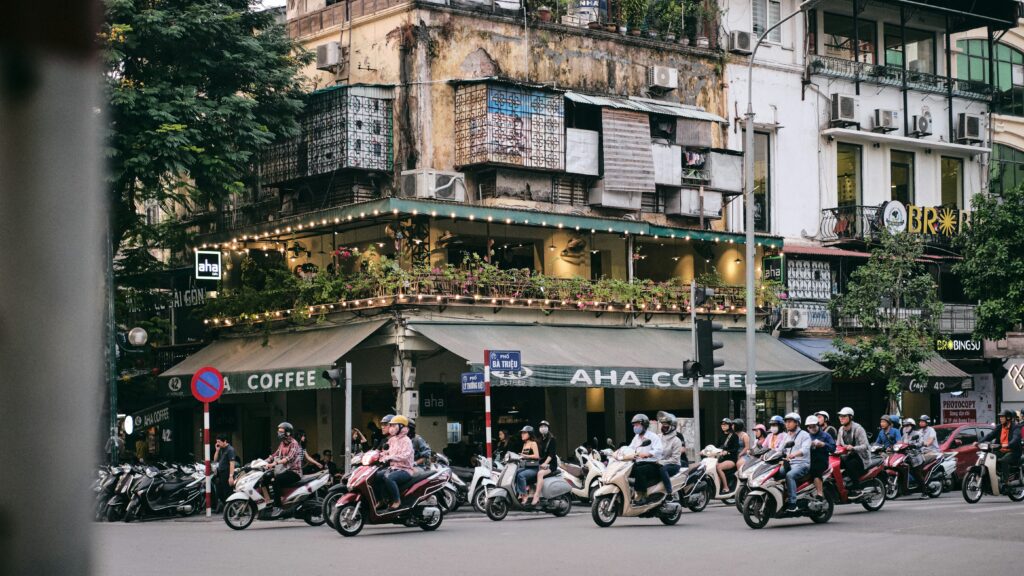
Duración: 3-5 days | Key Challenge: Rolling terrain, moderate climbs, humidity
Essential preparation: comfort with 50-70km days, the ability to handle rolling hills (300-600m daily gain), and heat tolerance.
Training priority: rolling terrain endurance (40%), given the constant up-and-down; heat tolerance (30%), since northern humidity is significant; moderate climbing (20%), frequent though not long; general endurance (10%) for multi-day capacity.
Specific workouts: – “Rollercoaster Ride” (weekly): 2-3 hours on rolling terrain with constant small climbs and descents, practicing rhythm through elevation changes. – Short hill repeats (weekly): 8-10 x 3-4 minute climbs at moderate effort with short 2-minute recoveries, simulating the route’s frequent short climbs. – Endurance ride (weekly): 3-4 hours at a steady pace across varied terrain, practicing tour pacing. – Back-to-back riding (weekends): Saturday 3 hours with hills, Sunday 2-3 hours moderate, building multi-day capacity.
Recommended training duration: minimum 8 weeks, optimal 12 weeks.
ESSENTIAL TRAINING COMPONENTS
The Core Four Elements (All Routes Need These)
Regardless of your route, every training plan should include the following four elements.
- Endurance Base (Foundation)
Sustained aerobic riding at a comfortable pace, built through long steady rides at conversational pace where the focus is time in the saddle rather than speed or power. Vietnam tours involve long days, often 6-8 hours of saddle time including breaks, and the body needs to process oxygen efficiently for that long.
Progression: build to 2 hours by weeks 1-4, 3 hours by weeks 5-8, 4 hours by weeks 9-12, and maintain 4-5 hours weekly from week 13 on. You’re doing it right if you finish feeling you could continue, your breathing stays easy and conversational, and you’re tired but not sore the next day.
- Climbing Strength (Hills)
The ability to ride uphill efficiently for extended periods, built through hill repeats (short intervals), sustained climbs (long efforts), and over-geared climbing for strength.
A typical hill repeat session: 15 minutes warm-up, 4-8 repeats of 4-8 minute climbs at moderate-hard effort with 2-4 minutes easy recovery between, then 15 minutes cool-down. A sustained climb session means finding a 20-60 minute climb and riding it at “all-day” pace, focusing on rhythm and efficiency rather than racing it.
Progression: 4x 4-min hill repeats weekly in weeks 1-4, 6x 5-min repeats plus one 20-30 min sustained climb weekly in weeks 5-8, and 6-8x 6-8 min repeats plus one 40-60 min sustained climb weekly from week 9 on.
- Back-to-Back Day Capacity (Multi-Day Endurance)
The ability to ride well on consecutive days despite accumulating fatigue. Vietnam tours run 3-21 consecutive riding days, and day 14 needs to feel close to day 1.
This is built through weekend back-to-back riding blocks, resisting the urge to fully rest between days, and teaching the body to recover while still moving. A typical block: Saturday is a “fresh” ride at normal effort (3-5 hours), and Sunday is a “tired legs” ride at moderate pace (2-4 hours) ridden despite the fatigue. The Sunday ride is the one doing the real work here, since it’s teaching your body to perform without being fully recovered, which is the central skill for multi-week tours.
Progression: one back-to-back weekend per month in weeks 1-4, two per month in weeks 5-8, three per month (or full Friday-Saturday-Sunday blocks) from week 9 on. An advanced block from week 10 on might look like: Friday 2-3 hours moderate, Saturday 4-5 hours (the biggest ride of the week), Sunday 2-3 hours despite fatigue.
- Heat Acclimatization (Tropical Prep)
Training the body to perform in 30-35°C heat with high humidity. Vietnam is tropical, and heat is often the real limiting factor, not fitness. Riders who haven’t adapted to it will struggle regardless of how fit they are.
Heat adaptation generally takes 10-14 days of exposure. The benefits include increased blood plasma volume, an earlier sweating response, a lower heart rate at a given effort, and better thermoregulation overall. Without that adaptation, expect a higher heart rate, earlier fatigue, and real heat exhaustion risk.
If you live in a cool climate, indoor heat training in the 6-8 weeks before the tour helps: ride indoors with a heater on or bundled in warm clothing for 45-60 minute sessions, 2-3x per week, to raise core temperature and sweat rate. It’s not pleasant, but it works. If your local weather allows it, outdoor heat training in the final 4+ weeks (riding during the hottest part of the day, slightly overdressed, with deliberately higher fluid intake) is even more directly useful.
Hydration training matters as much as heat exposure itself. Practice drinking 750ml to 1L per hour while riding, which is considerably more than most people naturally drink, and get used to drinking before you’re thirsty rather than after. Use electrolyte drinks, not just water.
In the final two weeks, if your climate allows it, daily 30-60 minute passive heat exposure (hot yoga, a sauna after a ride, a hot bath) supports the same adaptation without the exercise load.
If you already live in a hot climate, you have a head start. Keep riding regularly in the heat and focus your remaining effort on hydration practice.
A few rules apply regardless: start gradually rather than jumping into 90-minute hot rides, expect your heart rate to run 10-15 bpm higher than normal, stop if you feel dizzy, nauseous, or stop sweating, and hydrate aggressively before, during, and after. Don’t do hard intervals in heat, don’t skip hydration, and don’t push through warning signs, since heat illness is genuinely serious.
Complementary Training (Supporting Your Cycling)
Strength Training (2x per week): supports injury prevention, power development, and stability. Key exercises: single-leg squats or lunges, deadlifts or Romanian deadlifts, core work (planks, side planks, dead bugs), and step-ups. Sessions run 30-40 minutes, 2-3 sets of 8-12 reps, with form prioritized over weight and intensity kept low enough that you can still ride the next day.
Flexibility & Mobility (3x per week): supports comfort in the riding position, injury prevention, and recovery. Focus areas: hip flexors, hamstrings, lower back, and shoulders/neck. Options include yoga (especially Yin or restorative styles), a dedicated 15-20 minute stretching routine, or foam rolling. Best done post-ride while muscles are warm, in the evening, or on rest days.
Core Stability (3x per week): supports power transfer and endurance posture. Effective exercises: planks (3x 45-60 sec), dead bugs (3x 10-12 reps per side), bird dogs (3x 10-12 reps per side), and hollow body holds (3x 30-45 sec). 10-15 minutes total, before or after rides, with a focus on movement quality rather than grinding out reps.
HEAT ACCLIMATIZATION PROTOCOL
Preparing for Tropical Cycling
Vietnam averages 30-35°C (86-95°F) during cycling season with 70-90% humidity, which feels closer to 38-42°C (100-108°F). For many riders, heat, not fitness, ends up being the limiting factor.
The 14-Day Adaptation Window
Days 1-3: increased discomfort, higher perceived effort, elevated heart rate, heavy sweating as the body learns to cool itself.
Days 4-7: an earlier sweat response, a slightly lower heart rate, better fluid retention, and improved comfort overall.
Days 8-14: a notably lower heart rate for a given effort, more efficient sweating (higher volume, better cooling), increased blood plasma volume, and comfortable performance in heat.
After 14 days: adaptation is largely complete. Heat stops being the primary limiter, and performance approaches what you’d see in cooler weather.
Practical Heat Training Protocols
Protocol 1: Indoor Heat Training (for cold-climate dwellers) Timeline: 8-10 weeks before the tour. Use an indoor trainer in a warm room (or with a space heater), aiming for 45-60 minutes at easy-moderate intensity, 3-4x per week. Wear warmer clothing than normal and reduce airflow to raise core temperature and induce sweating. A sample session: 10 min warm-up, 30-40 min steady at conversational pace, 10 min cool-down. Expect to lose 1-2 kg in sweat, which needs replenishing afterward.
Protocol 2: Outdoor Hot Weather Training Timeline: 4-6 weeks before the tour, weather permitting. Ride during the hottest part of the day (noon-3pm), slightly overdressed, with deliberately higher fluid intake than feels comfortable, while monitoring heat stress signals closely. A sample week: Tuesday 60 min, Thursday 90 min, Saturday 2-3 hours starting in heat and finishing cooler. Progress from 45-60 minute sessions in week 1 to longer rides by week 4.
Protocol 3: Passive Heat Exposure Timeline: final 2-3 weeks before the tour. Post-ride hot baths (15-20 min), sauna sessions (15-20 min, 3-4x per week), or hot yoga (60-min classes, 2-3x per week) all raise core temperature without exercise stress, triggering the same adaptation mechanisms at lower injury risk, and can be layered on top of regular training.
Hydration Strategy Training
Most cyclists under-drink. The tour goal is 750ml-1L per hour, which is more than most people are used to.
- Weeks 1-4: establish a baseline (most people are at 250-500ml/hour to start), begin forcing more, and use a timer to drink every 15 minutes.
- Weeks 5-8: target 600-750ml per hour, using larger bottles or a hydration pack, and practice drinking without slowing down. Add electrolytes to aid absorption.
- Week 9+: target the full 750ml-1L per hour, ideally practiced in heat, with electrolytes included since sodium matters as much as volume. Aim for 500-1000mg sodium per hour.
A useful practice workout: a 2-3 hour ride where you pre-hydrate with 500ml thirty minutes before, drink 750ml-1L per hour on a timer during the ride, and weigh yourself afterward. Finishing at the same weight you started means you got the fluid intake right; losing weight means you didn’t drink enough.
Recognizing Heat Illness
Early warning signs (manageable): unusual fatigue, mild headache, reduced performance, heavy sweating. Response: slow down, increase fluid intake, seek shade at the next stop.
Heat exhaustion (serious): heavy sweating, pale and clammy skin, fast and weak pulse, nausea or vomiting, dizziness, muscle cramps. Response: stop immediately, seek shade, hydrate with electrolytes, cool down with wet towels, and rest.
Heat stroke (emergency): body temperature above 40°C/104°F, hot and dry skin (sweating has stopped), a rapid and strong pulse, confusion or altered mental state, possible loss of consciousness. Response: call emergency services, get to shade, cool aggressively with ice or cold water, and elevate the legs.
Heat training rules: start gradually, monitor how you feel, hydrate aggressively, train with a buddy if possible, carry your phone and emergency contact info, and know the warning signs. Don’t run hard intervals in serious heat, don’t train alone in remote areas during heat, don’t ignore warning signs, don’t skip hydration, and don’t train while sick or hungover, since heat amplifies all of those problems.
FINAL WEEK PREPARATION
The Taper Week: Rest Is Training Too
The goal of the final week is to arrive fresh, eager, and fully recovered. A common mistake is training hard right up until departure; the final week is about protecting freshness, not adding fitness.
Monday (T-7): 60-90 min easy ride, conversational pace, no hard efforts. The point is staying loose, not training.
Tuesday (T-6): 45-60 min with a few short efforts (3-4 x 2-3 minute pickups at moderate intensity), just enough to wake the legs up.
Wednesday (T-5): rest day, or 30-45 min very easy spin. Focus on packing, gear checks, and logistics.
Thursday (T-4): 60 min easy ride including a few “openers” (3x 90-second efforts at tour pace), keeping the legs responsive without tiring them.
Friday (T-3): 30-45 min easy spin or rest. Final bike check, packing.
Saturday (T-2): rest, or 20-30 min very easy spin if you feel restless. Travel prep, hydrate well.
Sunday (T-1): rest or travel day. Hydrate, eat well, early bedtime, no riding.
Monday (Tour Day 1): you’re ready.
Common Final Week Mistakes to Avoid
- Squeezing in “one more hard ride”: you’re tapering, not training, and a hard ride at this point will only leave you tired.
- Doing your longest ride because you feel great: feeling great is the taper working. Save that energy for the tour.
- Resting completely for seven days: total rest tends to leave you sluggish. Keep moving with easy spins instead.
- Trying a new saddle, position, or piece of gear in the final week: never change equipment this late. Only use what you’ve already tested.
Final Week Checklist
Capacitación reduce total volume by 40-50%; maintain some intensity with short efforts; keep rides under 90 minutes; do your final ride 2-3 days before the tour starts.
Equipment: final bike check (brakes, gears, tire pressure); break in any new gear (chamois, shoes, helmet); test all electronics (GPS, lights); pack cycling clothes.
Body: hydrate consistently (check that urine runs pale yellow); eat normally with no dramatic diet changes; sleep 8+ hours a night; expect some pre-tour nerves, which are normal.
Logistics: visa confirmed; travel insurance documents in hand; emergency contacts shared; meeting point and time for the tour understood.
Mental: review the route and daily itinerary; set realistic expectations; remember the support van is always available.
EQUIPMENT BREAK-IN SCHEDULE
Why Break-In Matters
New gear can cause saddle sores, hotspots and blisters, chafing, and general discomfort that’s easy to avoid by testing everything during training rather than discovering it on tour.
Chamois & Cycling Shorts/Bibs
Timeline: 4-6 weeks before the tour.
Wear them for 60-90 minute rides in week 1, 2-3 hour rides in weeks 2-3, your longest rides in weeks 4-5, and confirm comfort at 4+ hours by week 6. Pay attention to padding placement, waistband comfort, leg gripper fit, and any chafing at seams or edges. Buy 3-4 pairs of the same tested model for the tour and rotate them daily; never bring untested shorts.
Cycling Saddle
Timeline: 8-12 weeks before the tour, longer if possible.
Build from 30-60 minute rides in weeks 1-2 up to 4+ hour rides by week 7. Monitor sit bone pressure, soft tissue comfort (no numbness), positional stability, and whether comfort holds up over multiple hours, since the first hour doesn’t predict the third. Persistent numbness, pain that worsens over time, or chafing that doesn’t improve are red flags. If a saddle isn’t working by week 6, change it rather than hoping it’ll improve on tour.
Cycling Shoes
Timeline: 6-8 weeks before the tour.
Build from 45-60 minute rides to all ride lengths over the first month. Watch for hotspots (often appearing around the 60-minute mark), toe box comfort, heel cup security, and cleat position affecting knee tracking. Do several 3-4 hour rides in the shoes before the tour, since foot issues tend to show up on long days, not short ones.
Helmet
Timeline: 4-6 weeks before the tour. Wear it for all training rides, including in heat (some helmets trap heat more than others), and verify comfort over multiple hours and a properly functioning retention system.
Gloves
Timeline: 4 weeks before the tour. Use them across 2-3 rides of varying length, checking padding placement, seam chafing, breathability in heat, and how easily they come off for bathroom breaks.
GPS / Electronics
Timeline: 2-4 weeks before the tour. Fully charge and update firmware, load any test routes, practice mounting and unmounting, test in rain if water resistance is claimed, and verify battery life against actual use. Bring charging cables, a portable battery bank, and adapters for Vietnam’s outlets (Type A, C, G).
Clothing Shakedown
Timeline: 4-6 weeks before the tour. Test every jersey across 2-3 hour rides, base layers under extended wear, arm and leg warmers across various conditions, the rain jacket in actual wet riding, and the wind vest across a range of temperatures. Watch for chafing at the underarms, neck, and waist, temperature regulation, pocket accessibility while riding, and whether reflective elements actually work.
Final Equipment Check (1 Week Before)
Bike: professional tune-up or a thorough personal check; brakes and gears working cleanly; correct tire pressure; no unusual sounds or wobbles.
Gear: cycling clothes washed and packed; shoes clean with laces checked; helmet clean with adjusted straps; gloves clean and intact; sunglasses clean and unscratched.
Electronics: GPS/phone fully charged; chargers packed; offline maps downloaded if needed.
Personal: chamois cream if you use it; sunscreen tested against sweat-related chafing; lip balm with SPF; medications in original containers.
NUTRITION & FUELING STRATEGY
Training Your Gut
Eating while riding is a skill, and your gut needs training just as much as your legs do. Tour days typically call for 200-300 calories per hour, starting around the 45-60 minute mark, before you’re actually hungry, and never going more than 90 minutes without eating.
Nutrition Periodization During Training
Early training (weeks 1-4): focus on establishing the habit of eating every 60-90 minutes on rides, experimenting with whatever sounds appealing.
Mid training (weeks 5-10): narrow down what actually works, eating every 45-60 minutes and testing various bars, gels, and real food while noting anything that causes stomach issues.
Final training (weeks 11+): lock in your system, eating tour nutrition exactly as planned using only foods you’ve already tested successfully.
What to Eat During Rides
Commercial options include energy bars (200-250 cal), energy gels (100-120 cal), energy chews (100-150 cal per package), and sports drinks (50-80 cal per bottle). Real food options include bananas (100 cal, easy to digest), PB&J sandwiches (300+ cal, more substantial), rice cakes with jam (150-200 cal), salted boiled potatoes (100-150 cal), and fig bars (100-150 cal). A mix tends to work best: bars and gels for quick energy during hard sections, real food for sustained energy during moderate stretches.
Pre-Ride Fueling
2-3 hours before: a full breakfast of 400-600 calories with carbs, protein, and some fat — oatmeal with fruit, toast with eggs, or rice with protein.
30-60 minutes before: a light snack if hungry, 100-200 calories, mostly carbs — a banana, a small energy bar, or toast with jam.
Avoid high fiber and high fat right before riding, since both slow digestion, and skip large protein portions right before a ride since they’re not needed for immediate energy. Stick to foods you’ve already tested before anything important.
During-Ride Fueling
The first 45 minutes are usually fine without food, since the body is running on stored glycogen. From 45-60 minutes on, start eating before you feel hungry. From hour two onward, aim for 200-300 calories every 45-60 minutes alongside constant sipping of water or sports drink with electrolytes, and never go past 90 minutes without eating something. In hot weather, increase fluid intake, lean toward easily digestible and liquid calories, and pay more attention to salt (pretzels, salted bars).
Post-Ride Recovery
Immediately after (within 30 min): 200-400 calories at roughly a 3:1 or 4:1 carb-to-protein ratio to start glycogen replenishment — chocolate milk, a recovery drink, a sandwich, or fruit with nuts.
Within 2 hours: a full meal of 600-1000 calories, balanced across carbs, protein, and vegetables, with 1.5L of water for every 1kg lost during the ride.
Evening: a normal dinner emphasizing carbs for tomorrow’s effort, with adequate protein for muscle repair, in normal portion sizes.
Common Nutrition Mistakes
Waiting until you’re hungry to eat means you’re already depleted by the time you start; eat proactively instead. Eating a lot at once works worse than small frequent doses, so aim for roughly 200 calories every hour rather than 600 calories once. Testing new foods only on long rides risks discovering a problem at hour three of a five-hour ride; test on short rides first. Drinking only to thirst isn’t enough in Vietnamese heat, and gels or sports drinks heavy on sugar without electrolytes leave out the sodium that matters just as much. Save unfamiliar Vietnamese dishes for non-riding times, and bring foods you’ve already tested for the bike itself.
MENTAL PREPARATION
Physical preparation gets you to the start line. Mental preparation gets you through the harder days in between.
Common Mental Challenges on Tour
“I’m the slowest in the group.” Every group has a range of ability, and slower riders get just as much out of the tour. The support van exists specifically to remove the pressure to keep pace with anyone else. Training at your own pace, rather than measuring yourself against others, helps this feel normal before you’re actually on tour.
“This is too hard.” Some days genuinely are hard, and that’s expected rather than a sign something’s wrong. Doing hard training rides ahead of time builds the confidence to know you can get through a tough day, and remembering past challenges you’ve gotten through helps too.
“I’m slowing everyone else down.” Guides are experienced with a full range of fitness levels, and using the van when you need to is a reasonable decision, not a failure. It can help to practice asking for support during training rides with others, and to remember that your experience matters as much as anyone else’s.
“I didn’t train enough.” This might be true or it might not be, but worrying about it doesn’t change anything at this point. Being honest about where your fitness actually is, adjusting expectations accordingly, and planning to use support strategically usually solves the problem better than anxiety does.
Visualization Training
Starting around weeks 8-12, a short visualization practice (about 10 minutes, 3x per week) can help: sit comfortably with eyes closed and walk through specific scenarios you expect to encounter, such as the final approach to the Hai Van Pass summit, feeling tired but continuing anyway, a relaxed lunch with the group, or the satisfaction of finishing a hard day. Include sensory details (heat, wind, the sound of the bike, your own breathing) and rehearse how you’d want to respond emotionally in each case. This works because the brain doesn’t fully distinguish between a vividly imagined experience and a real one, so the rehearsal builds genuine familiarity with situations before you’re actually in them.
Mantras & Self-Talk
It can help to have a short phrase ready for specific moments: something steady for climbs (“one pedal stroke at a time”), for heat (“hydrate, pace, repeat”), for fatigue (“tomorrow’s a new day”), and for doubt (“I’ve gotten through harder things than this”). The specific words matter less than having something ready before you need it.
FINAL THOUGHTS: THE TRAINING MINDSET
Consistency beats intensity. Three months of steady moderate training outperforms three months of sporadic all-out efforts. The ride you actually do beats the perfect ride you skip, and rest days are part of training rather than a break from it.
The 80/20 principle. Roughly 80% of training should be easy: conversational pace, not breathing hard, the kind of effort you could sustain longer if needed. The remaining 20% should be hard: hill repeats, tempo efforts, sustained climbs. Most people get this backwards and ride at a moderate-hard effort most of the time, which accumulates fatigue without building much fitness.
Listen to your body. Mild muscle fatigue, a bit of mental resistance before a ride that fades once you’re moving, and light muscle soreness are all normal and worth pushing through. Sharp pain, especially in a joint, illness, persistent unusual fatigue that doesn’t improve with rest, or signs of overtraining (poor sleep, elevated resting heart rate, mood changes) are reasons to stop and rest instead. When in doubt, take the rest day. A missed training session costs you very little; an injury from pushing through one costs you much more.
You don’t need perfect preparation. What actually matters is enough fitness to handle most days comfortably, the willingness to use support when you need it, some degree of heat adaptation, and enough mental resilience to get through the harder moments. If you’ve trained consistently for 8+ weeks, you’re in good shape. At 12+ weeks, you’re in very good shape. If you’ve done less than that, smart pacing and good use of the support vehicle can still get you a great tour.
APPENDIX: TRAINING LOG TEMPLATE
Week [#] of [Total]:
For each day (Monday through Sunday): Ride (Y/N/Rest Day), Duration, Distance, Elevation, Type, How I felt (1-10), Notes.
Weekly totals: total hours, total distance, total elevation, longest ride.
Body check: sleep quality (1-10), energy levels (1-10), any pain or discomfort, resting heart rate (tracked weekly).
Nutrition notes: was hydration adequate, was intake sufficient, any new foods tested, what worked, what didn’t.
Equipment notes: any gear issues, equipment to replace or repair, break-in items still in progress.
Next week’s goals: (1) (2) (3)
Overall week rating (1-10): Confidence level for tour (1-10):
TRAINING RESOURCES
Training tracking: Strava, TrainingPeaks, Garmin Connect or the Wahoo app.
Route planning: Komoot, RideWithGPS, Strava Route Builder.
Fitness tracking: a heart rate monitor (a chest strap is the most accurate), a power meter (optional, useful but expensive), or at minimum a basic cycling computer for speed, distance, and time.
Clima: Weather Underground, Windy.com.
Nutrition: MyFitnessPal, Cronometer.
Further reading: The Cyclist’s Training Bible by Joe Friel, Training and Racing with a Power Meter by Hunter Allen, Rodale’s Complete Book of Cycling, and The Ultimate Bicycle Owner’s Manual for maintenance basics.
FINAL CHECKLIST: AM I READY?
Check these two weeks before the tour.
Physical: can ride 60-70km comfortably; can climb 30-45 minutes continuously for moderate routes; have done back-to-back riding days; completed at least one 4+ hour ride; practiced heat exposure where possible; know your nutrition strategy.
Equipment: all gear broken in, nothing new; bike mechanically sound; saddle confirmed comfortable; cycling clothes tested for long rides; electronics charged and tested.
Knowledge: understand your route’s demands; know when to use the support vehicle; comfortable with hand signals and group riding; heat illness warning signs memorized; expectations set realistically.
Mental: more excited than nervous; confident in your preparation; ready for the harder days; flexible about using support.
Admin: visa sorted; travel insurance confirmed; emergency contacts shared; tour operator communication established.
