
What Our Guides Carry (And Why)

I asked a Vietnam cycling guide to empty his pockets.
We were at a rest stop on day three of a tour. Riders were taking photos, stretching, using the bathroom. The guide—Duc, 34, eight years’ experience—laughed at the request but obliged.
From his jersey pockets alone: two energy bars, a tube of sunscreen, a laminated route card, a compact multi-tool, a mobile phone with local SIM, a radio, a small tube of chamois cream, and about 500,000 Vietnamese dong in small bills.
“That’s just what I carry on my body,” he said. “Want to see the saddle bag? The support vehicle?”
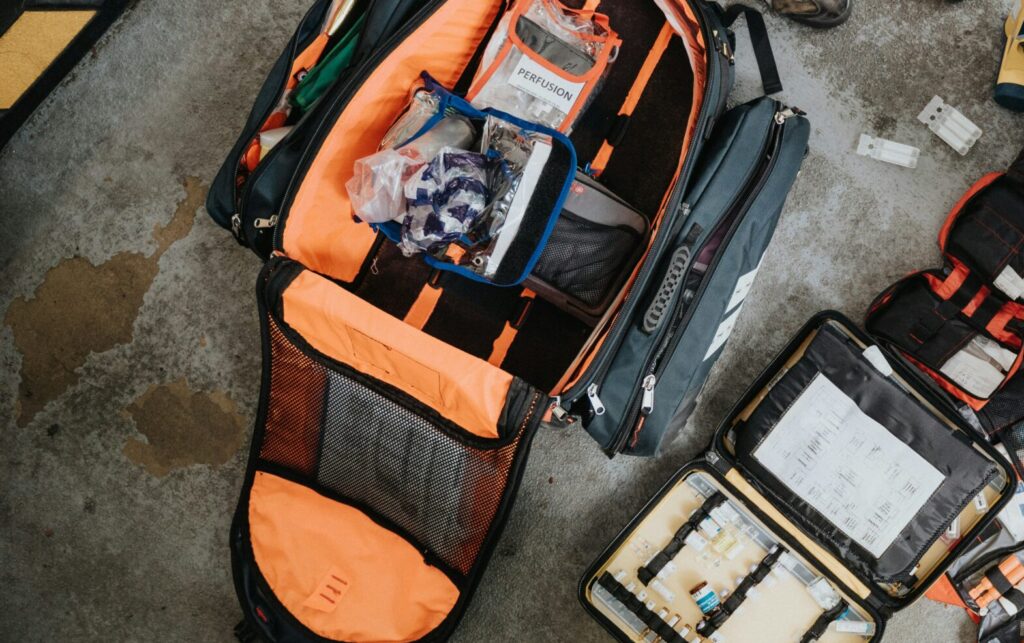
What followed was an education in what it actually takes to keep a cycling tour running safely through a country where the nearest hospital might be an hour away and the nearest bike shop might not exist at all. Here’s the complete inventory—and why each item matters.
Why Good Operators Limit Group Size to 12 (Even Though Bigger Groups Are More Profitable)

Here’s a business reality that most tour operators won’t explain to you:
A 20-person cycling tour is significantly more profitable than a 10-person tour. Not twice as profitable—more than twice as profitable. The math is brutal and obvious.
Fixed costs stay roughly the same: one lead guide, one support vehicle, one route, one set of hotel bookings to manage. Variable costs increase only marginally—a few more lunches, slightly larger room blocks. But revenue doubles.
So when you see an operator capping groups at 10-12 riders instead of 20-24, you’re watching them leave money on the table. Deliberately. Repeatedly. Tour after tour.
Why would anyone do that?
What Happens When Something Goes Wrong
Nobody asks this question directly.
You’ll ask about the bikes. You’ll ask about the hotels. You’ll ask about the food and the daily distances and whether there’s WiFi. But the question underneath all those questions—the one that wakes you up at 2 AM after you’ve paid your deposit—is harder to articulate.