
Bike Fit Matters: How to Arrive Comfortable and Leave Without Injury

Three days into a Vietnam cycling tour, a rider—let’s call him David—starts feeling a twinge in his left knee. By day five, the twinge is a persistent ache. By day seven, he’s riding in the support vehicle, watching his tour pass by through a window.
The culprit wasn’t the climbing. It wasn’t the heat. It wasn’t his fitness level.
It was his saddle height—3 centimeters too low. For seven days, every pedal stroke ground his kneecap against cartilage that wasn’t designed for that angle of force. By the time the pain became undeniable, the damage was done.
Why We Wrote Down Every Step of Our Tours, and Why We’re Giving It Away

Standard Operating Procedures matter on a cycling tour because so much of what keeps people safe and the trip running well happens in the gap between “guide makes a judgment call” and “guide follows a tested process.” Heat exhaustion, a mechanical failure, a busy intersection: these go better when the response is rehearsed rather than improvised in the moment. We’re sharing it because transparency is part of how we want to earn trust. Consider it free to copy, adapt, and put into practice.
How Your Cycling Guide Keeps You Safe Without You Noticing
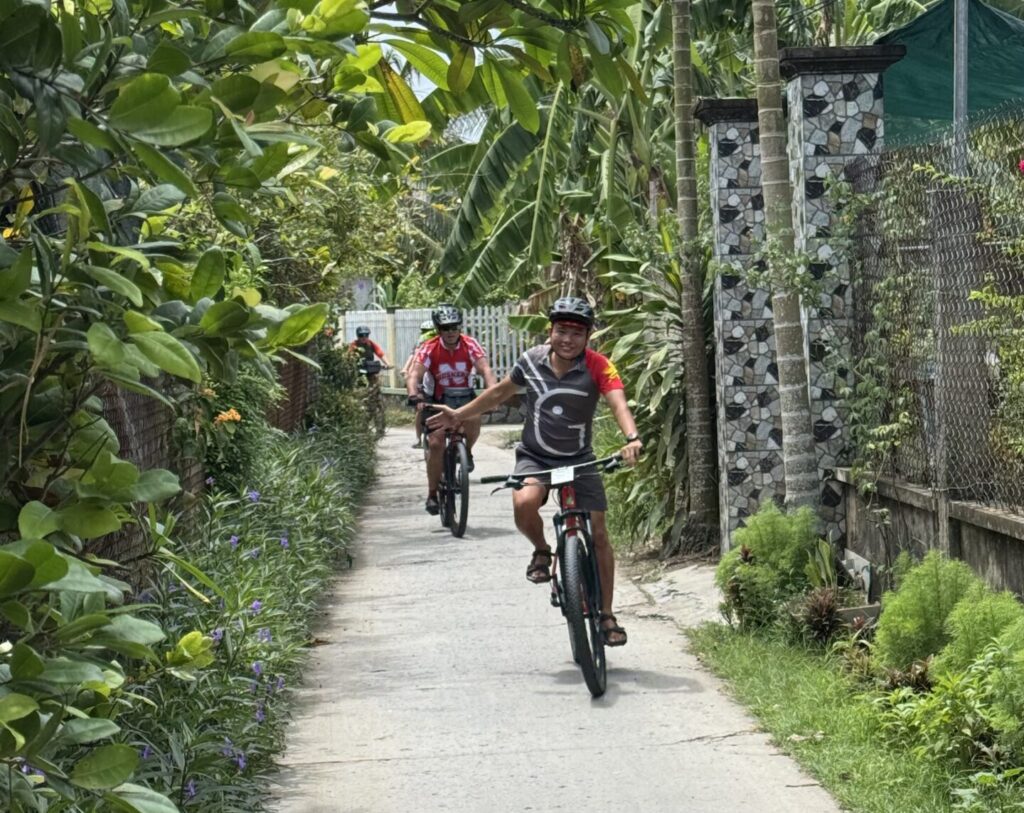
Halfway up Hai Van Pass, a 58-year-old accountant from Melbourne starts showing signs that something’s wrong.
She’s flushed, but it’s hot—everyone’s flushed. Her cadence has dropped, but it’s a climb—everyone slows down. What the guide notices is subtler: her hands keep drifting to her temples. She’s swaying slightly on the bike.
The guide doesn’t announce anything. He doesn’t make a scene. He just rides up beside her and says, “Beautiful spot for a photo break, yeah? Let’s pull over.”
Within three minutes, she’s in the air-conditioned support van with ice water and a wet towel on her neck. Within thirty minutes, her core temperature has dropped, her headache is fading, and she’s annoyed at herself for “not being tough enough.”
The 2-Hour Bike Inspection You Never See
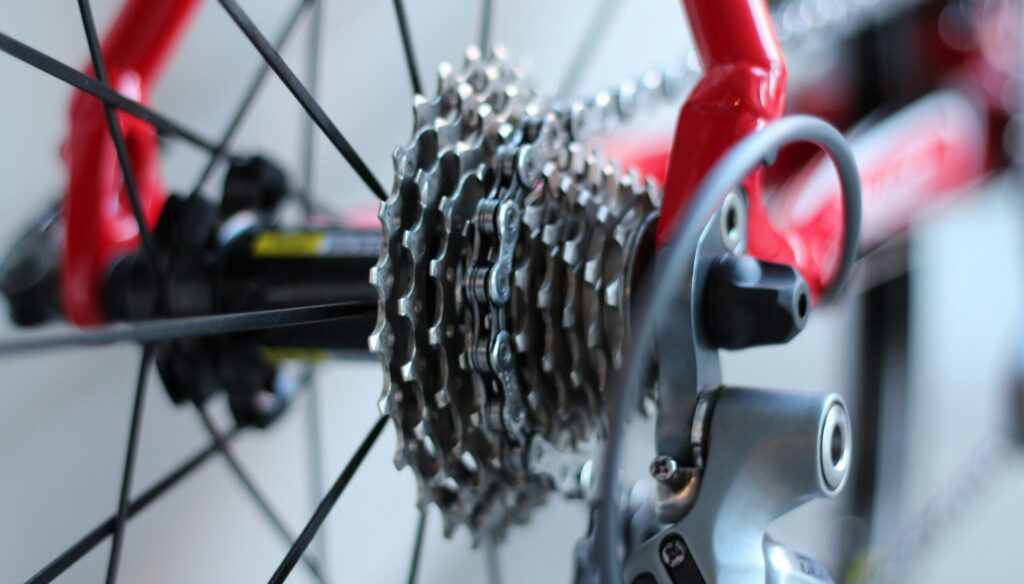
The bike looked fine.
It was a Trek FX 3, two years old, maybe 8,000 kilometers on the odometer. Clean frame, fresh bar tape, tires with plenty of tread. If you’d walked into a bike shop and seen it on the floor, you’d have called it a quality used bike in good condition.
Thang, the head mechanic at a leading Vietnam tour operator, had been inspecting it for forty-five minutes. He wasn’t satisfied.
“Here,” he said, pointing to the rear derailleur hanger—a small metal tab that connects the derailleur to the frame. “You see?”
I didn’t see anything. It looked like metal.
He pulled out a magnifying glass. Under magnification, a hairline crack was visible, running about 8 millimeters along the hanger’s surface.
What Happens Before You Arrive: The 60-Day Countdown to Your Vietnam Cycling Tour
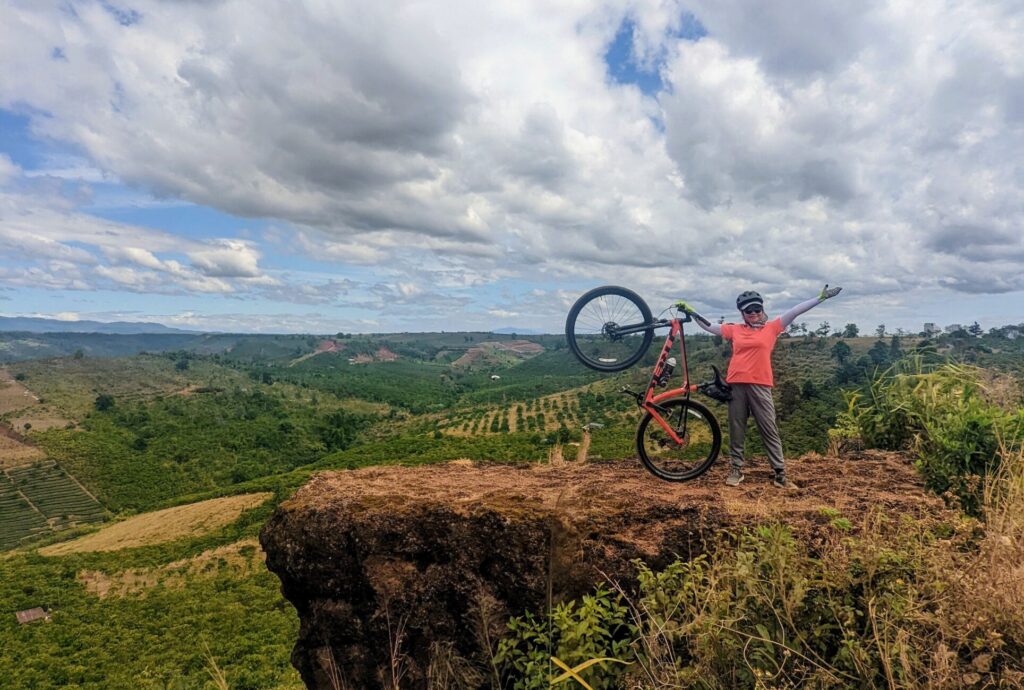
You land in Hanoi at 6 AM, bleary-eyed and buzzing with nervous energy. By 9 AM, you’re sitting on a perfectly fitted bicycle. By 10 AM, you’re navigating through a river of motorbikes, somehow not dying. By noon, you’re climbing through rice terraces so beautiful they make your chest hurt.
It feels like magic. Like the bike just appeared. Like the route just materialized. Like someone waved a wand and suddenly everything just works.
A Day in the Life of a Vietnam Cycling Guide

From 6 AM huddle to 9 PM bike maintenance—what it actually takes to make your adventure feel effortless
What’s in the Support Van? A Complete Inventory
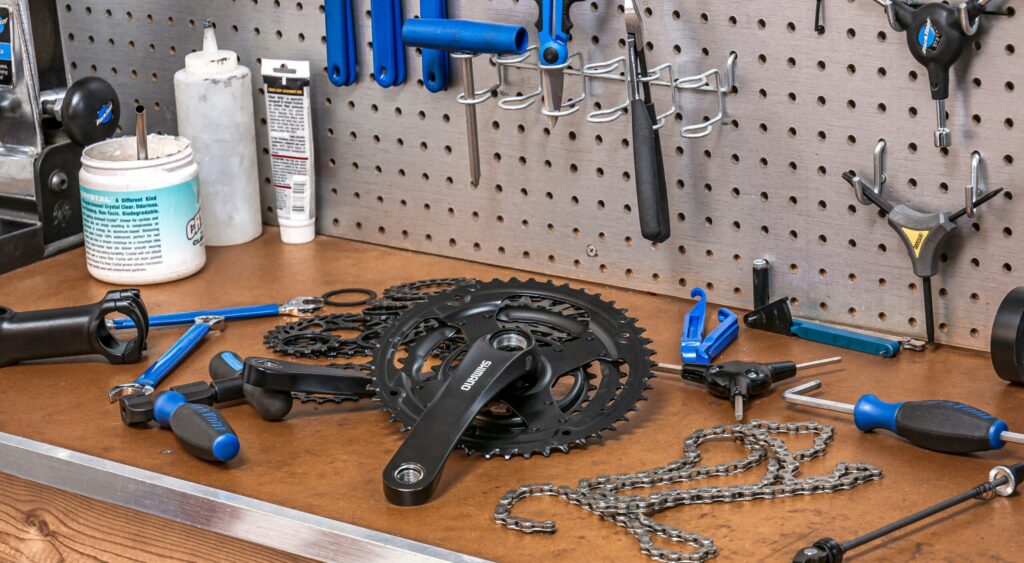
For most of your Vietnam cycling tour, the support van is a background presence. It’s somewhere behind you, hazard lights blinking, carrying your luggage and occasionally appearing at rest stops with cold water.
You probably don’t think much about it. That’s by design.
But that van is, in many ways, the most important vehicle on the tour. It’s a mobile repair shop, a climate-controlled recovery room, an emergency response station, and a backup transportation system. When something goes wrong—a mechanical failure, a medical issue, extreme weather—the van transforms from background to essential in seconds.
I spent a morning unpacking a support van with its driver, cataloging everything it carries. The inventory tells you a lot about what professional operators prepare for—and what they’re promising you, whether they say it explicitly or not.
What Our Guides Carry (And Why)

I asked a Vietnam cycling guide to empty his pockets.
We were at a rest stop on day three of a tour. Riders were taking photos, stretching, using the bathroom. The guide—Duc, 34, eight years’ experience—laughed at the request but obliged.
From his jersey pockets alone: two energy bars, a tube of sunscreen, a laminated route card, a compact multi-tool, a mobile phone with local SIM, a radio, a small tube of chamois cream, and about 500,000 Vietnamese dong in small bills.
“That’s just what I carry on my body,” he said. “Want to see the saddle bag? The support vehicle?”
What followed was an education in what it actually takes to keep a cycling tour running safely through a country where the nearest hospital might be an hour away and the nearest bike shop might not exist at all. Here’s the complete inventory—and why each item matters.